
Freedom with Responsibility
After launching the international career of Australia's newest World Cup hero, the tactician is turning his analytical gaze toward the Thai League. He explains the myth of the tropical press, the technical superiority of ASEAN youth, and why the A-League pipeline is missing the trick.
Speaking over a video link, Brad Maloney cuts a relaxed but intensely focused figure. He is currently piecing together an itinerary, planning to arrive in Bangkok “by the end of next week”. He arrives with a very specific, open-minded ambition: to re-enter the daily grind of club management within the upper echelons of Thai football.
For the uninitiated, the transition of an Australian coach into the volatile, hyper-technical environment of Southeast Asian football is often viewed as a doomed culture clash—a collision between rigid Antipodean structure and raw, unmoored regional flair. Yet Maloney is not a typical footballing export.
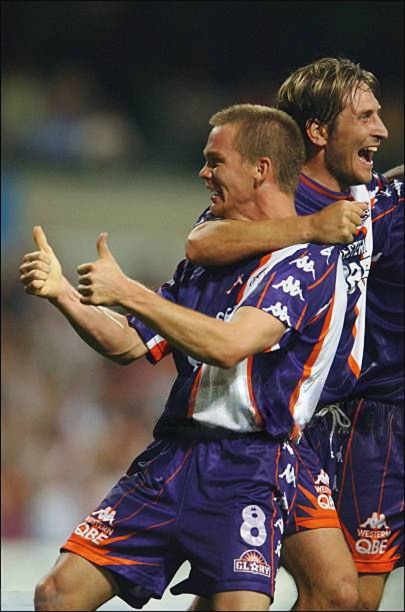
Before he was orchestrating transitions from the dugout, Maloney was the one enforcing them on the pitch. A robust, tactically astute midfielder, he was a cornerstone of Australia’s old National Soccer League (NSL) throughout the 1990s and early 2000s, racking up hundreds of appearances for heavyweight clubs like Marconi Stallions and Perth Glory. He was not a player to shirk a tackle, but his game was defined as much by his spatial intelligence and reading of the play as his physical grit. Earning his stripes on the international stage, he represented the Olyroos at the 1992 Barcelona Olympics and collected senior caps for the Socceroos during a rugged, formative era of Australian football. That on-pitch education—blending relentless physical application with acute tactical awareness—clearly informs his current managerial doctrine.
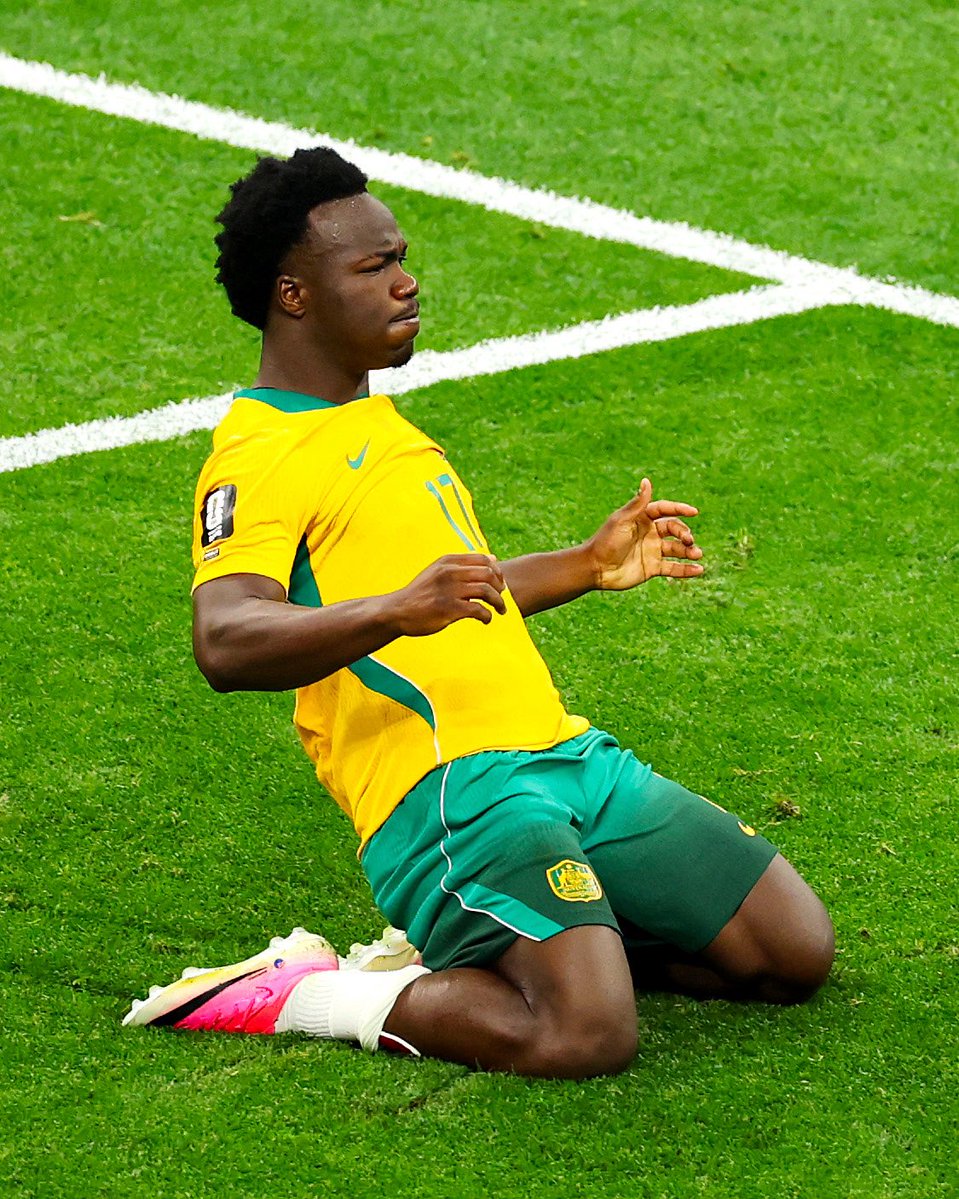
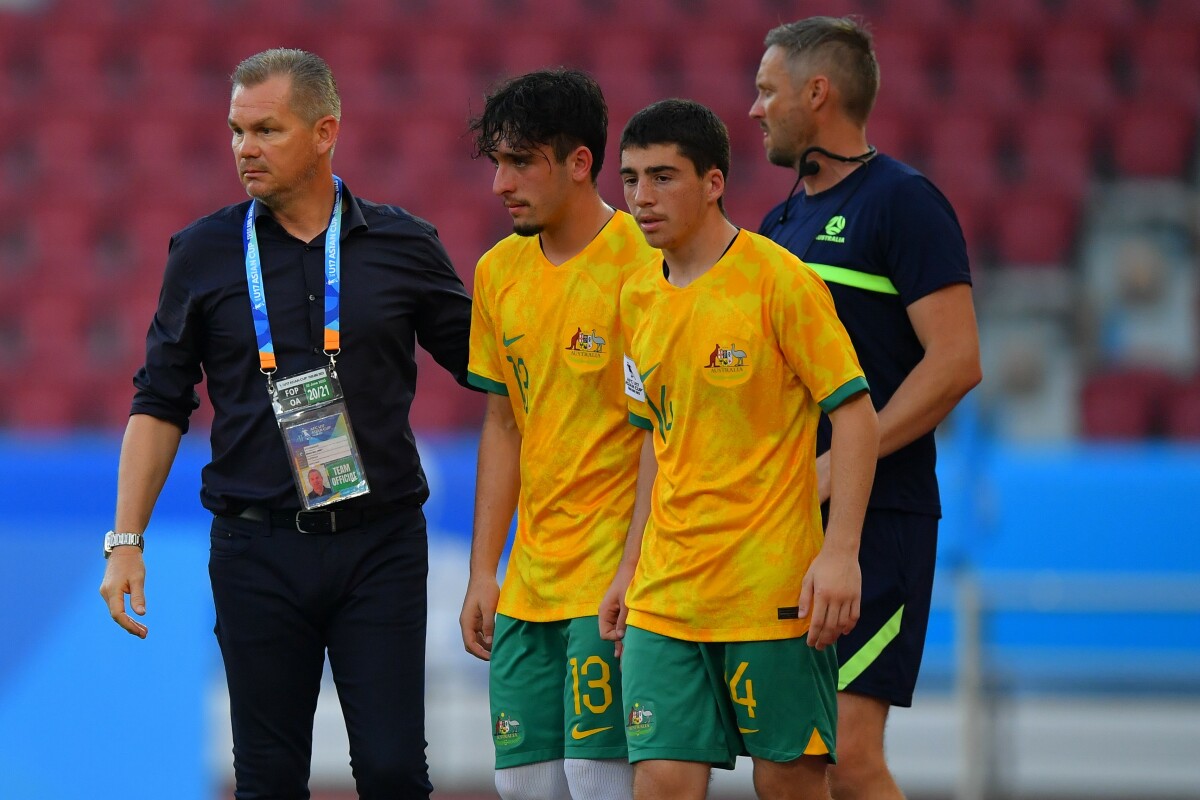
To understand Maloney’s pedigree for elite youth development, one only needs to look at the recent events of the 2026 World Cup. When an electrifying 20-year-old Nestory Irankunda tore through the Turkish defence in Vancouver to become Australia’s youngest ever World Cup goalscorer in a historic 2-0 victory, the roots of that international breakthrough traced directly back to Maloney. It was Maloney who nurtured the explosive forward's early development and handed Irankunda his debut for the Joeys (Australia's U17s). That unique capacity to harness raw, uninhibited talent and integrate it into a disciplined tactical framework is the very foundation of Maloney’s managerial career.
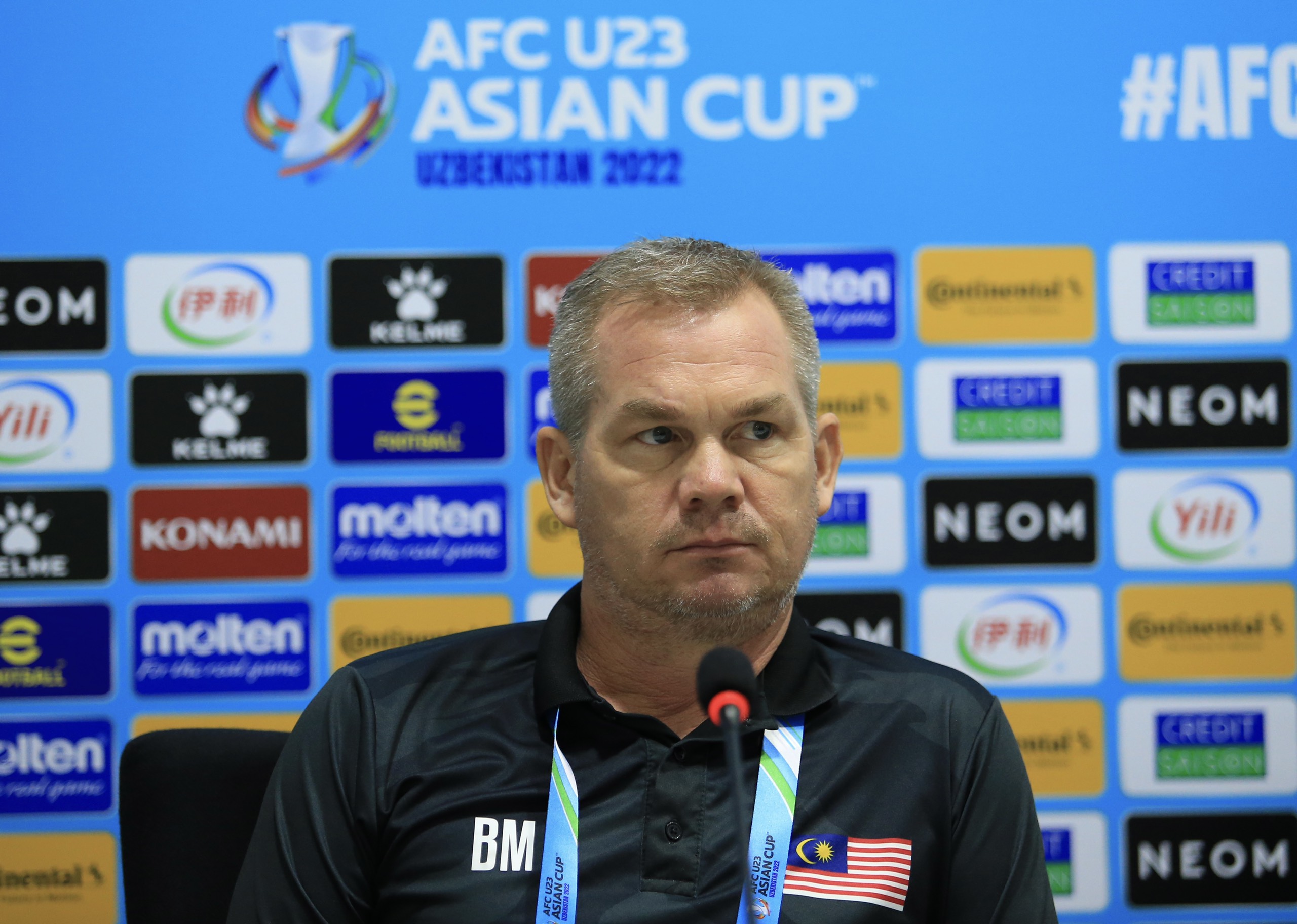
His transition into Southeast Asian coaching began long before his stint with the Joeys, taking up a post with the Football Association of Malaysia (FAM) in 2014. It was a move he made with "no real expectation," yet it evolved into a tenure lasting nearly eight years. Across that span, Maloney served as a senior team assistant and the head coach for the U20 and U23 sides, navigating the relentless pressure of AFF tournaments, SEA Games, and Asian Cups.
The Australian Blueprint and the Reality of Chaos
When comparing the footballing ecosystems of Australia and Southeast Asia, the natural assumption from Western observers is that the Australian pathway produces inherently better footballers. Maloney emphatically challenges this stereotype. When he first arrived in Kuala Lumpur, facing a squad where many players did not speak English, he found a crop of talent that dismantled his preconceptions.
"Generally speaking, the players were great," Maloney explains. "They wanted to learn. They were technically very good. I would say in many ways superior to a lot of the Australian players I've coached at that age group."
The deficit was not in natural ability, but in the institutional scaffolding that surrounded them. "They just need a little bit of perhaps education," he says, pointing to the introduction of sports science, nutrition, and sports medicine. Furthermore, the tactical infrastructure was lacking; when he arrived in 2014, the use of video analysis within the national team space "wasn't widely used". Bringing these modern analytical tools into the fold fundamentally elevated both the players and the surrounding staff.
The Myth of the Tropical Press
A frequent, rather lazy cliché peddled by foreign managers and pundits in Southeast Asia is that the punishing heat and humidity render modern, high-intensity pressing systems impossible. It is an excuse often used to justify passive, deep-block defending. Maloney firmly dismisses this notion, arguing that the failure to press effectively in Asia is rarely a physiological issue, but a structural one.
"People say it all the time... you can't press for 90 minutes," he acknowledges. "But the bottom line is, you know, it's in the finer detail."
For Maloney, a successful press in a tropical climate requires immense footballing intelligence. "The players have to know, they have to learn, you know, the right cues when to press or what the triggers are to put pressure on the ball straight away," he says. "Must be a collective press. It can't be just one or two players going off on their own because they'll get picked off. So, again, that comes back to your organisation and your structure and your discipline."
This philosophy underpins his entire approach to management. A foreign coach, he notes, must arrive with the flexibility to understand "the local culture, the local mentality" and work within those regional parameters. Yet, they are hired to inject a distinct methodology. For Maloney, the foundational principles are entirely non-negotiable.
"Definitely you want to dominate in all areas of the game," he states. "So with the ball, without the ball, and in the transition moments, you want your players to be dominant. You want to be close together with the ball so that if you do lose it, then you're already in a position to get your defensive block organised and get pressure on the ball straight away to try and win it back as quickly as possible."
He characterises his desired tactical aesthetic as "an attractive brand of possession-based football," but one strictly anchored by accountability. "I want my players to play with freedom, but I call it freedom with responsibility. So if you do turn the ball over, there's another job to do to win it back straight away."
This extends to individual flair. Southeast Asian football is littered with players possessing immense one-on-one ability, yet they frequently sabotage team momentum through poor decision-making or needless showboating. Maloney does not seek to eradicate this flair, but to contextualise it. "I never want to stop players doing from what they do well. I just want to integrate that into the whole team game," he says. The key is teaching a player that their brave, expressive decisions in the final third "have to be made in a split second" and must ultimately be "the best decision for the team at the time."
The Thai Frontier and the Basketball Game
With his time at Football Australia concluded, Maloney is ready to return to the daily club grind in Asia. Thailand is at the top of his agenda, and for good reason.
"I love the Thai League," he states unequivocally. "It's one of the strongest leagues in Southeast Asia."
He points to the recent continental success of Buriram United as evidence of the division's current pedigree. His respect for the Thai game is deeply rooted in his experiences on the opposing touchline. "Whenever we played Thailand both physically and technically we knew they were good players," he recalls. "Thailand has a great reputation of producing very good players and, um, you know, that's really something that appeals to me to work within that environment."
Yet, for all its technical brilliance, the Thai League suffers from distinct tactical inefficiencies. The domestic game is frequently marred by a lack of late-game control. When observing Malaysian football in his early years, Maloney noted that matches frequently devolved into chaotic, end-to-end "basketball games" after the 60-minute mark. While he believes the Thai League is slightly more advanced, the risk of structural collapse remains prevalent.
The antidote, according to Maloney, is not merely running players into the ground on the training pitch, but implementing a framework designed to suffocate the chaos entirely. "Working within a disciplined framework so that we can dominate matches, dominate possession, dominate oppositions," he explains. "If you're dominating possession, then you're definitely not going to be pressing as much as what you might have to."
A League Crying Out for New Voices
There is an undeniable sense that the Thai League is currently in need of fresh tactical minds. For all its aesthetic appeal, formidable infrastructure, and financial muscle, T1 can frequently feel like a managerial echo chamber. Clubs are often guilty of endlessly recycling the same domestic names or relying on the predictable carousel of European journeymen who arrive with boilerplate philosophies that completely ignore the realities of the climate and the culture.
To truly elevate the standard and bridge the gap to East Asia's elite, the league requires new voices. It needs managers who fundamentally respect the regional DNA but refuse to coddle its bad habits. It requires analytical minds that can look at the chaotic beauty of the Thai game and see not something to be systematically eradicated, but something to be sharpened and weaponised through rigorous rest-defence and transition management.
The Antipodean Disconnect
Given the tactical evolution of the Thai League, its geographical proximity, and the severe financial constraints currently squeezing Australia’s domestic A-League, the lack of a significant Australian player exodus to Thailand remains a baffling anomaly. While figures like Danny Invincible have carved out successful long-term careers in the Kingdom—recently ascending from Head of Academy to Director of Football at Bangkok United—the broader player pipeline remains relatively dry.
Maloney admits the disconnect is puzzling, suggesting the root cause is likely a severe lack of awareness. "Perhaps a lot of the players are probably not aware of how good the Thai League is and what it can not only provide the player but... how the player can contribute to the Thai League," he notes. "It may not be a big focus for players or agents even... but for me it would definitely be a good opportunity for any Aussie player to go over there and play a season. I'm sure they'd be surprised at the level that they'll be playing at."
The reality is that an influx of structurally disciplined, physically robust Australian players could seamlessly address the tactical imbalances present in many Thai squads, provided the players are willing to test themselves outside their domestic comfort zone.
Swapping the Office for the Pitch
For the past dozen years, Brad Maloney has operated exclusively within the cyclical, high-stakes realm of international football. It is a life dictated by fleeting international windows, intense scouting periods, and the meticulous construction of squads from afar. Now, the allure of the daily club environment is pulling him back.
"I'd rather be on the ground with the boots on than sitting in an office every day or something like that in between windows," he admits.
As he prepares for his impending meetings in Bangkok, his pitch to prospective chairmen and sporting directors is refreshingly devoid of hyperbole. He arrives with a proven track record of ushering young talent through the developmental pipeline and into senior football across multiple national associations.
More importantly, he offers a clear, uncompromising blueprint for how the game should be played. "Having a well-organised team, disciplined, dedicated to playing [an] attractive brand of football, engaging with the fans," he summarises.
In a region where football is often a beautiful, unscripted riot of technical ability, Brad Maloney offers something far rarer: a system that protects the art by demanding responsibility. As he touches down in Bangkok next week to navigate the boardrooms of the Thai League, it will be fascinating to see which club is brave enough to hand him the reins.
Next tour: Port v Rayong
Saturday 24 October 2026 · ฿3,900 ฿2,999 per person, all inclusive. Ticket, private transport, pre-match briefing and a guide who knows the league inside out.
Book Your Place →