
When a vacuum is suddenly breached, the physics of the collapse are profound.
Surrounding matter does not merely trickle into the void, it rushes forward with an undeniable velocity, filling the space far quicker than any complacent onlookers care to anticipate.
For over a decade, power in Thai football has resided comfortably in Buriram with the occasional season wintering in Bangkok. From these air-conditioned, occasionally water-buffalo-afflicted boardrooms the domestic pyramid has largely been dominated by established corporate entities and the well-funded vanity projects of wealthy provincial tycoons. At times, the matchday experience at some of these traditional clubs can feel a touch orchestrated; they often play out their existences in cavernous municipal stadiums where the atmosphere is occasionally propped up by a few choreographed fans—or perhaps salaried club employees—armed with a megaphone and a corporate sponsor's drum kit.
The deep South, meanwhile, was historically treated as a footballing afterthought. It was viewed as a picturesque but distant borderland, permitted to enthusiastically contest the regional lower tiers but structurally insulated from the elite.
Now, however, the seals have broken. The structural vacuum that long kept Southern football contained has ruptured. The subsequent rush of regional ambition, capital, and raw, tribal passion is integrating with the professional leagues in a way that is fundamentally reshaping the landscape of the Thai game, proving that authentic grassroots support can challenge the traditional elite.
The Vanguard of the Peninsula
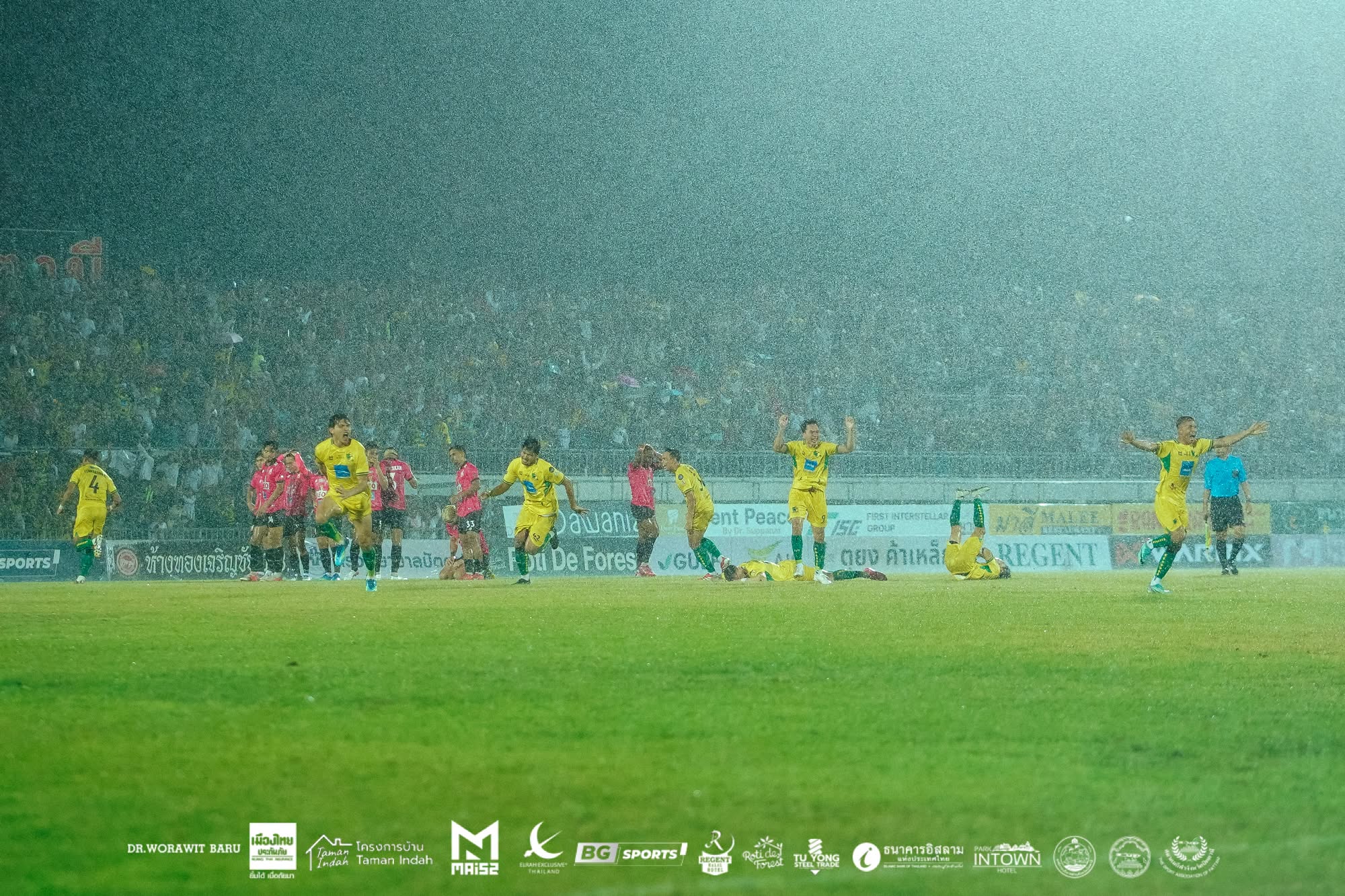
The undisputed vanguard of this geopolitical shift is Pattani FC. Their recent promotion to Thai League 1 via the gruelling Thai League 2 play-offs stands as a watershed moment for the domestic game. It is a triumph achieved not through sudden corporate consolidation, but through the sheer weight of community obsession.
Fandom on the peninsula is inherently different. It is deeply rooted in local history, provincial pride, and communal identity. The packed terraces of the coastal stadiums are spaces of intense, peaceful communal catharsis, offering a more fevered yet incredibly welcoming matchday experience. To truly understand this, one only needs to look at Pattani’s attendance figures. They completely sold out the 12,000-capacity Rainbow Stadium on several high-stakes occasions. In a move that perfectly illustrates the beautiful absurdity of southern passion clashing with modern bureaucracy, the club was actually fined by the Football Association of Thailand for exceeding stadium capacity, as supporters packed every available inch of concrete to witness their ascent.
There is, however, a bittersweet caveat to this rapid rise. Due to the stringent licensing and infrastructure requirements of Thai League 1, the Rainbow Stadium requires comprehensive upgrades to host top-flight football. Consequently, Pattani will be forced to play their home fixtures in neighbouring Songkhla for the first half of the upcoming season while their own ground is brought up to code. It is a logistical hurdle, but one that their fiercely loyal travelling support will undoubtedly turn into a weekly pilgrimage.
Pattani’s entrance into the elite is already subtly shifting domestic transfer dynamics. Their impending capture of Singaporean international forward Ikhsan Fandi on loan from BG Pathum United is a clear statement of intent. It proves the South is now a prestigious destination capable of attracting genuine regional talent.
The Songkhla Challenge
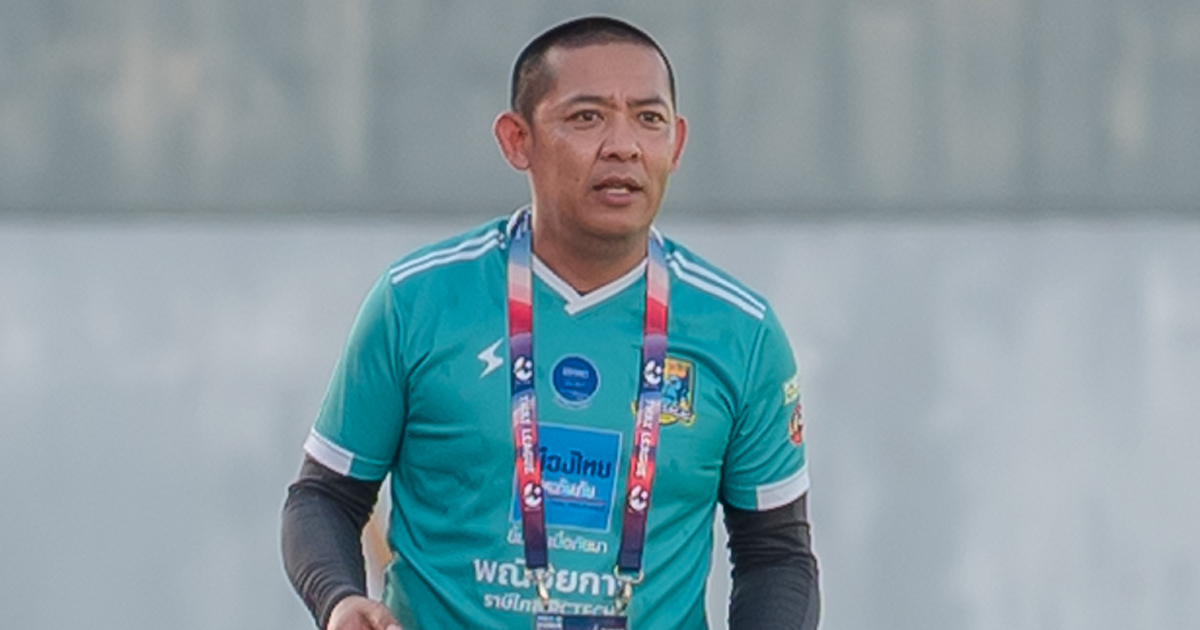
If Pattani represent the spiritual romance of this Southern awakening, Songkhla FC embody its calculated sporting ambition. Having narrowly missed out on joining their neighbours in the top flight, Songkhla have spent the off-season transforming their operation into a highly efficient promotional machine designed to compete at the sharp end of T2.
Their most significant piece of business occurred in the dugout, securing the managerial services of Arnon Bandasak. Bandasak is the tactical architect who miraculously guided Rasisalai United to top-flight promotion last season. However, because he currently lacks the mandatory FIFA Pro License required to manage in Thai League 1, Bandasak has brought his formidable tactical blueprint south to T2.
Songkhla have been swift with their international recruitment. They have retained the mercurial Brazilian forward Thiago 'Mosquito' Rodrigues da Silva, while adding three crucial new faces: the towering 195cm presence of Amarildo Junior to act as a physical focal point, the vast European experience of Martinique winger Steeven Langil, and their newly unveiled fourth international, Brazilian centre-back Flavio.
The rest of the squad has been meticulously built upon a robust, capable Thai core. While they are not necessarily the outright favourites for the title, under Bandasak’s tactical guidance they are pushing to compete and will undoubtedly look to challenge the likes of Kanchanaburi, Nakhon Ratchasima, and Muangthong all the way in the fierce race for promotion.
The Gathering Wave and the T3 Reshuffle
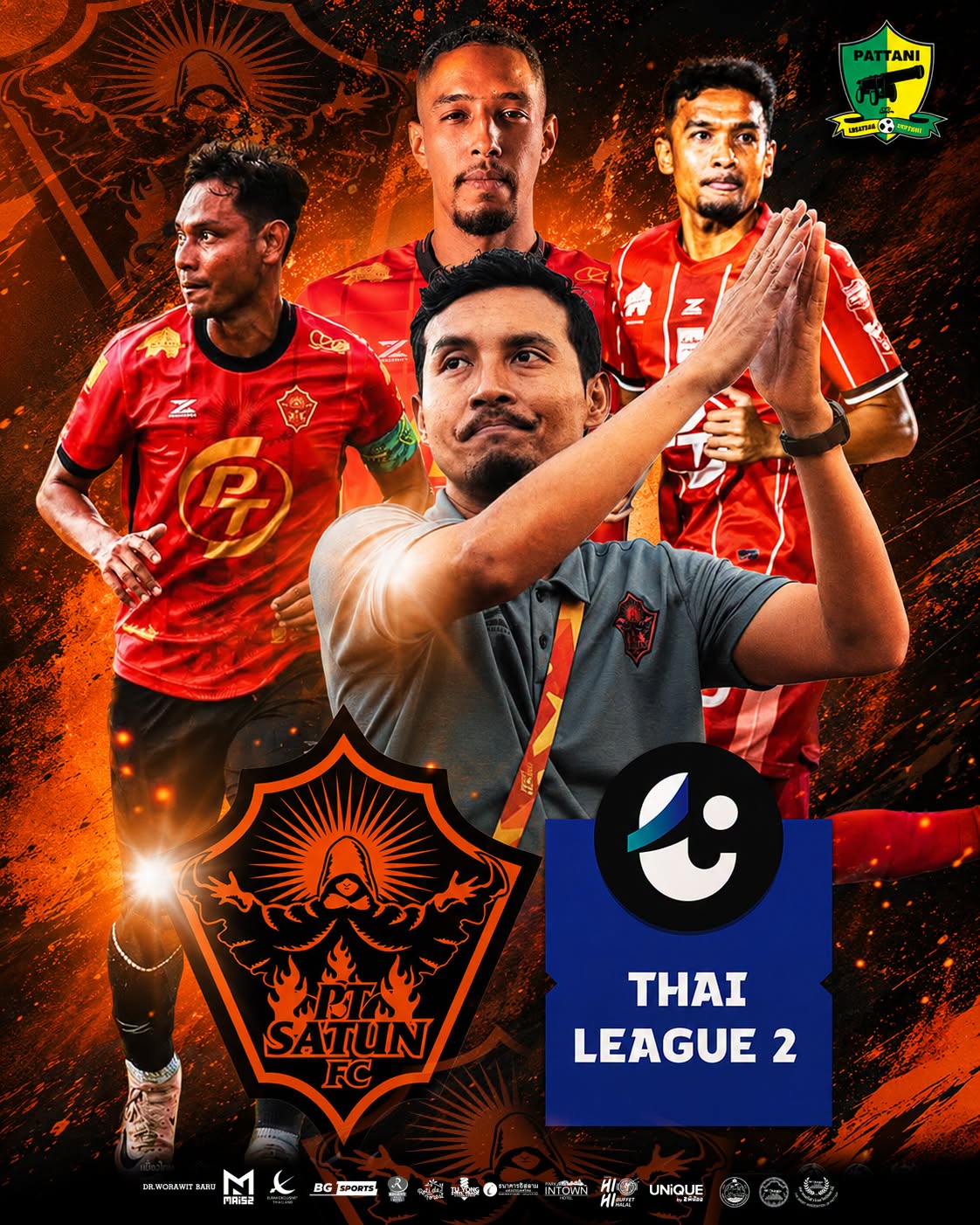
This Southern surge in the second tier is further reinforced by the upward mobility of Nara United and Satun. However, as the gaze shifts down the pyramid to the Thai League 3 Southern Zone, this rapid migration of talent has left behind a fascinating administrative reshuffle.
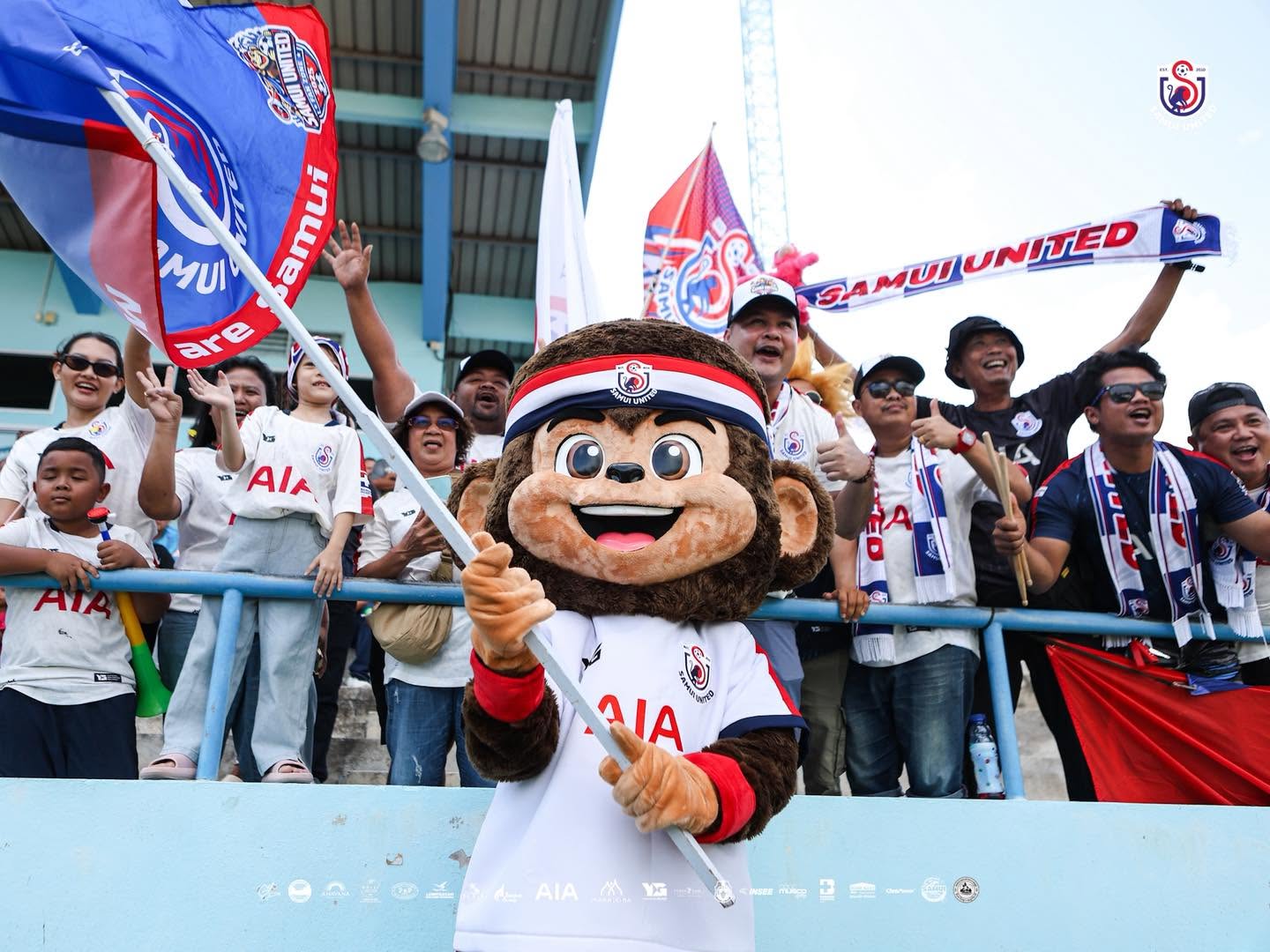
At the top end of the division, the race for the two coveted play-off spots for promotion is already taking shape. We are tipping Samui United, Yala FC, Nakhon Si United, and Phuket Andaman to be the main contenders to reach the playoff rounds, with a heavily invested Samui United entering the campaign as clear favourites.
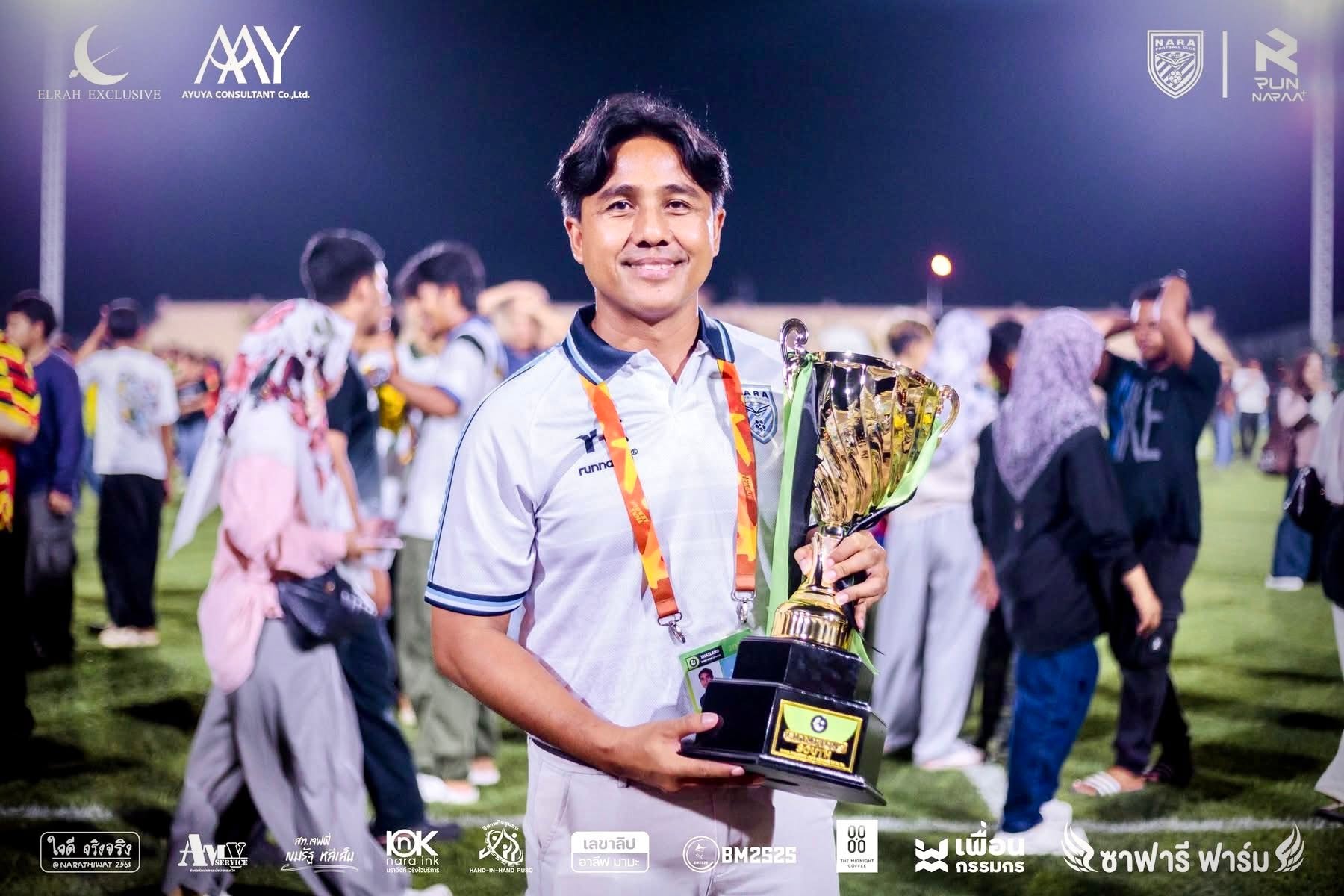
Further down the table, the division faces a numbers crisis. With clubs moving up to T2, there are three spots in the T3 South roster that desperately need to be filled to maintain a viable league. Currently, the vacancies look set to be filled by Nara FC—who earned promotion by winning the Thailand Semi-Pro League (TSP) South—alongside TSP runners-up Yala City, and a relegated Krabi FC side, provided the latter can clear their crippling financial debts and FIFA registration bans.
Should Krabi be unable to settle their books, the situation becomes an administrative puzzle. The next in line would be Phatthalung, who finished third in the TSP South, though there are serious question marks over whether they actually possess the inclination or resources to make the step up. If they decline, the spot could theoretically fall to Suratthani Rajabhat University (SRU). Yet, one suspects they might similarly lack the inclination, given that sustaining two professional outfits in Surat Thani stretches local commercial reality. At that point, the FAT’s strict TSP promotion protocols would be pushed to their absolute limits to find a viable solution; Phuket United would be next in line, but that remains a considerable 'if'.
The South is rising, reshaping the established boundaries of Thai football. From the roaring terraces of Pattani to the meticulous squad-building in Songkhla, the peninsula is bringing a much-needed wave of genuine, tribal passion to the professional leagues. As the traditional establishment makes room, the game as a whole stands to benefit immensely from this vibrant integration.
Next tour: Port v Rayong
Saturday 24 October 2026 · ฿3,900 ฿2,999 per person, all inclusive. Ticket, private transport, pre-match briefing and a guide who knows the league inside out.
Book Your Place →