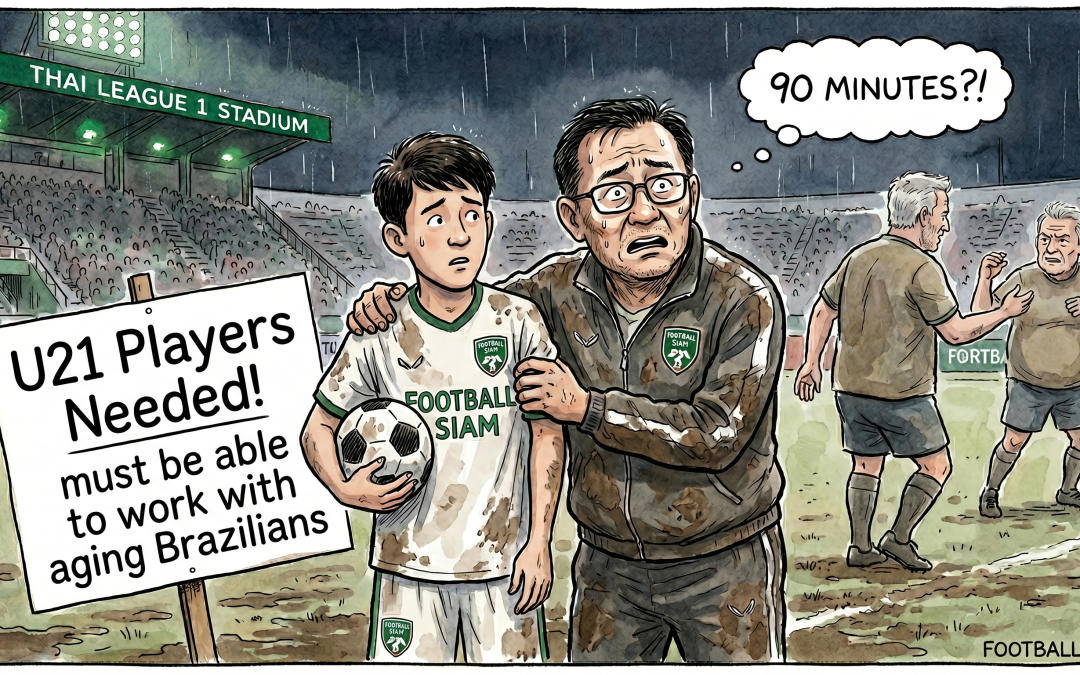
The bureaucratic corridors of FIFA in Zurich rarely produce edicts that genuinely excite football purists, but the latest proposal regarding homegrown player regulations is a spectacular exception. The governing body is advancing a mandate that would legally compel all professional clubs to field at least one club-trained Under-21 player for the entire duration of every competitive domestic fixture.
While Europe’s elite recoil at the thought of throwing an untested teenager into a title decider, the boardroom executives of Thai League 1 should be experiencing a cold sweat. For the better part of two decades, our domestic game has treated youth development not as the foundation of club building, but as a tedious administrative checklist. We have become a league hopelessly addicted to imported, aging talent.
The Striker Crisis and the Foreign Bottleneck







To understand the profound necessity of this forced evolution, one only needs to glance at the current Thai League 1 top scorers chart. It is a sobering exercise in national self-reflection. As we progress deep into the season, there is not a single Thai player in the top ten. The list is entirely monopolised by foreign imports.
This is the ultimate symptom of a diseased developmental pathway. The blueprint for success, or at least for avoiding the drop, has long been written in the ink of short-term survival. Why spend five years, thousands of coaching hours, and millions of baht meticulously developing a local teenage striker when a club can simply sign elderly journeymen Brazilians and Africans to secure mid-table safety?
The transfer windows in Thailand often resemble a chaotic, high-priced merry-go-round. The same familiar faces swap shirts, secure lucrative signing-on fees, and subsequently block the pathway for the next domestic generation. The Thai league is undoubtedly the strongest in the ASEAN region, boasting the best stadiums and the highest broadcasting revenues, but it is a strength built upon a fragile, imported foundation.
The Forensic Data: The T1 Game Audit
There is a prevailing, comfortable myth within Thai football that modern club licensing strictly mandates a thriving, functional youth academy. The reality is far more cynical. To obtain a license to compete, clubs do not actually need to run an elite, cohesive youth setup; they merely need to demonstrate a loose affiliation with a local school or field a nominal youth side that fulfills the bare minimum of regulatory paperwork.

Building out the historical database for Football Siam requires late nights, a steady stream of unsweetened Americanos, and a high tolerance for repetitive administrative paperwork. In the interest of absolute journalistic rigour, we have conducted a forensic sweep of the official starting line-ups across Match Week 1 to Match Week 29 of the season. In a league of 16 teams playing 8 games a week, this encompasses a cast-iron analysis of 5,104 starting spots.
Across the fixtures, foreign imports and seasoned professionals monopolised the pitch. An Under-21 prospect was trusted to start on just 145 occasions out of the 5,104 starting spots analyzed in our audit. That is a starting percentage of exactly 2.85%.
The Academy Illusion

Yet, even that miserable 2.85% is a statistical mirage. It is a figure that tells us a player’s age, but it tells us absolutely nothing about their developmental origin. History and common practice within the Thai game suggest that the number of players genuinely nurtured through a specific club’s academy is vanishingly small.
The current system relies on apex predators swooping down the pyramid. A teenager has a breakout season for a Semi-Pro League side, and the elite clubs immediately flex their financial muscle to buy him. The statistics might record him as a U21 starter, but he is fundamentally a purchased asset, not a homegrown triumph.
The Port FC Anomaly and the Stockpiling Monopolies
During our audit, we witnessed a massive statistical anomaly in the capital. After operating for the vast majority of the season without handing a single start to an Under-21 player, Port FC finally broke their duck. Yet, this isolated start is the exception that proves a miserable rule. Heavyweight, heavily-backed clubs remain entirely devoid of U21 talent in their starting elevens for weeks on end.
Even at the clubs that do invest heavily in youth infrastructure, the current system is fundamentally broken. Take Buriram United, the undisputed heavyweight champions of Thai football professionalism. They possess state-of-the-art facilities and an incredibly aggressive scouting network. Yet, their methodology has morphed into something resembling monopolistic stockpiling. They routinely scour the provinces, signing up the nation’s most promising 15- and 16-year-olds. But once inside the gates of the Thunder Castle, these elite talents frequently hit a glass ceiling, sitting behind maximum foreign quotas.
The Survival Instinct: Debunking the Vanity Project
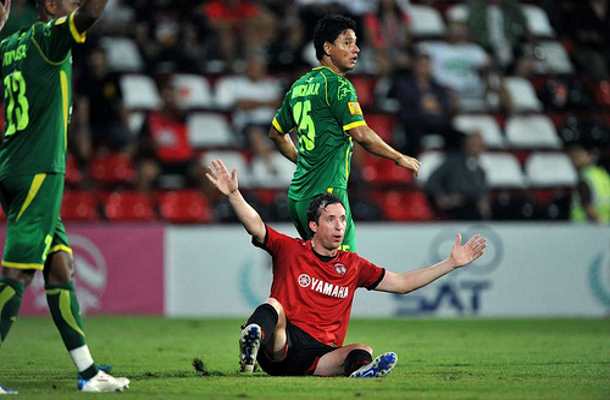
It is entirely too easy to sit in the press box and accuse Thai club owners of engaging in expensive vanity projects. We have watched the likes of Robbie Fowler and Jay Bothroyd grace our pitches, right up to the recent arrival of former Premier League veteran Andros Townsend at Kanchanaburi Power FC.
While it is tempting to claim managers sign 32-year-old foreigners purely for shirt sales and fleeting media buzz, that narrative ignores the brutal, pragmatic reality of Thai football. Managers operate within an intense, unforgiving sack-culture. If a head coach loses three consecutive matches because he trusted a raw 19-year-old local lad who made inevitable rookie errors, that coach loses his livelihood. They do not rely on aging Brazilians out of vanity; they rely on them out of a desperate need for short-term survival.
The 60km Rule: Lessons from the UK
To truly permanently fix the ecosystem of Thai football, the FAT should look to European history and the implementation of a 60km youth catchment rule. Historically, the UK utilised a strict 90-minute travel rule for academy players. It protected smaller, provincial clubs from the financial muscle of the elite. It was this exact ruling that allowed a club like Crewe Alexandra to build an unparalleled academy, and ensured local lads stayed local.
A 60km rule in Thailand would immediately dismantle stockpiling monopolies. The heavyweights would no longer be able to financially muscle in and poach the best 14-year-old from the opposite end of the country. More importantly, it provides a vital lifeline to the smaller provincial clubs. Teams like Sukhothai, Prachuap, or Rayong would suddenly have guaranteed access to their own local talent pools.
The J.League Blueprint
If the boardroom executives of Thai League 1 need proof that restricting foreign imports to force local development actually yields results, they only need to look at the genesis of the Japanese J.League. When the J.League launched, it heavily relied on the aging, imported glamour of players like Zico. The Japanese FA quickly realised it was a superficial bubble and pivoted to the "100 Year Vision", which mandated that every club must establish a comprehensive academy structure.
The result? Japan engineered one of the most miraculous footballing ascents in modern history. The J.League evolved from a retirement home for European veterans into the most technically proficient league in Asia. Thailand currently sits exactly where Japan was in 1994.
National Team Paralysis
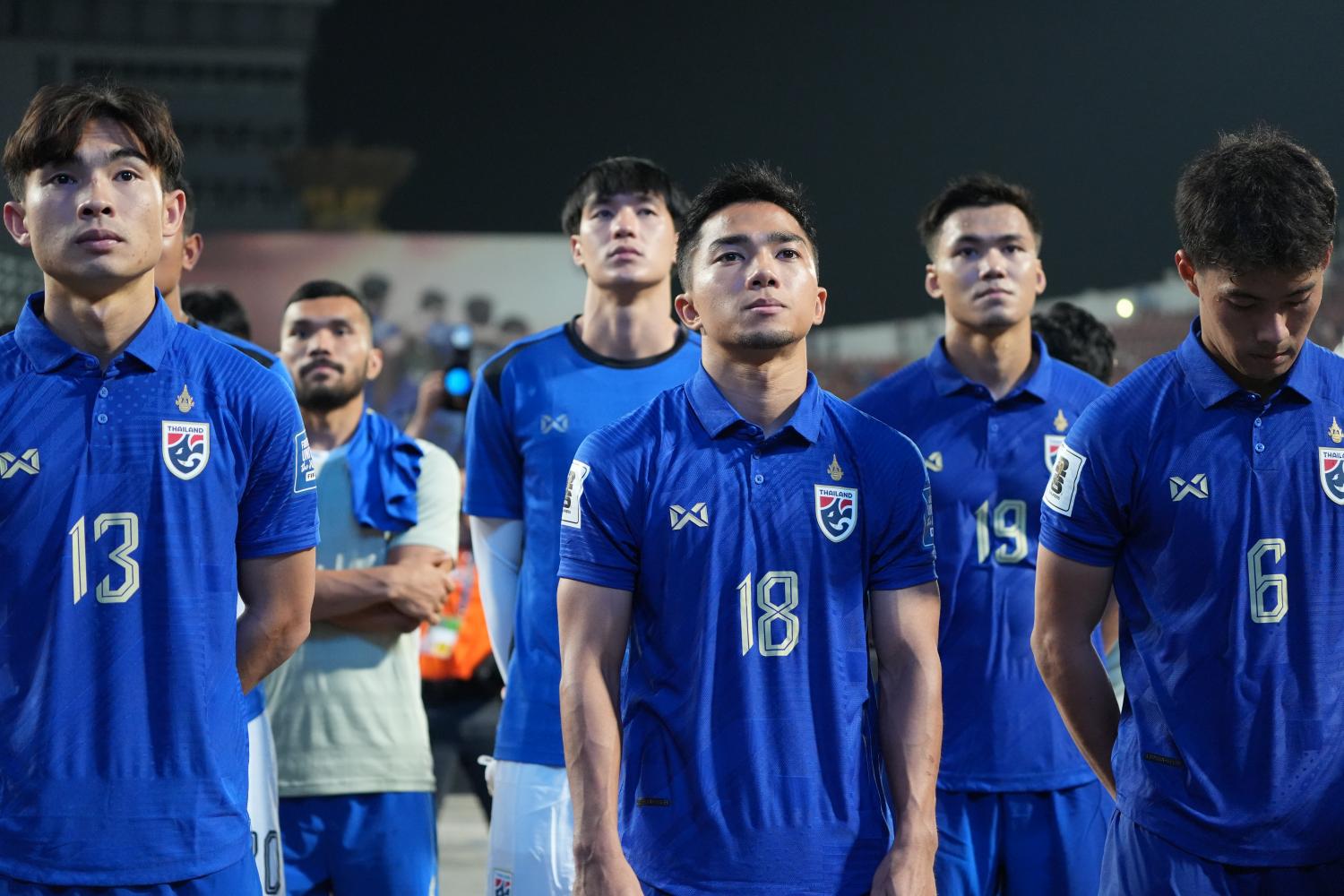
The consequences of ignoring this issue paralyse the War Elephants. When it comes time to select an Under-23 squad for crucial tournaments, the national team manager is forced to assemble a squad of players whose only match fitness comes from reserve team football. By forcing 16 elite-level teenagers to play 90 minutes of high-stakes, competitive domestic football every single weekend, the FIFA mandate would organically create a match-hardened breeding ground for the national side.
The Full 90-Minute Mandate: Ending the Tokenism Trap
Perhaps the most critical aspect of the new rule is that the academy Under-21 player must be on the pitch for the entire duration of the game. This is a direct strike against tokenism. In years past, a manager might satisfy a youth quota by starting a teenager only to haul him off at the 20-minute mark to bring on a veteran.
Under this mandate, that "token" tactical sub is no longer an option. If the starter goes down or struggles, the replacement must be another U21 academy graduate. This forces clubs to not just find one player, but to build a bench of at least two or three capable youngsters. It forces youth development from a PR exercise into a non-negotiable tactical reality.
The Necessary Chaos
This U21 academy mandate feels like a bespoke, targeted cure for the exact ailment plaguing Thai football. It is the bitter medicine we have collectively refused to swallow for twenty years. It will undoubtedly cause severe short-term chaos. Managers will complain loudly to the press about a drop in technical standards, and we will inevitably witness some teenagers being roasted by experienced foreign wingers.
Yet, out of that necessary chaos, a sustainable future could finally emerge. A future where Thai League clubs are judged not by the fading foreign stars they can afford to import, but by the young, homegrown talent they are capable of forging. The era of the foreign legion has run its course. It is time for the missing generation to take the pitch.
Next tour: Port v Rayong
Saturday 24 October 2026 · ฿3,900 ฿2,999 per person, all inclusive. Ticket, private transport, pre-match briefing and a guide who knows the league inside out.
Book Your Place →
Spot on. What about a league just like one here in Singapore? 7 foreigners across 8 clubs not accounting for a sprinkle of neutralised citizens.
Our national squad virtually picks itself.
Thanks Robert, agreed limit is the best way. Putting the cat back in the bag is always hard though!