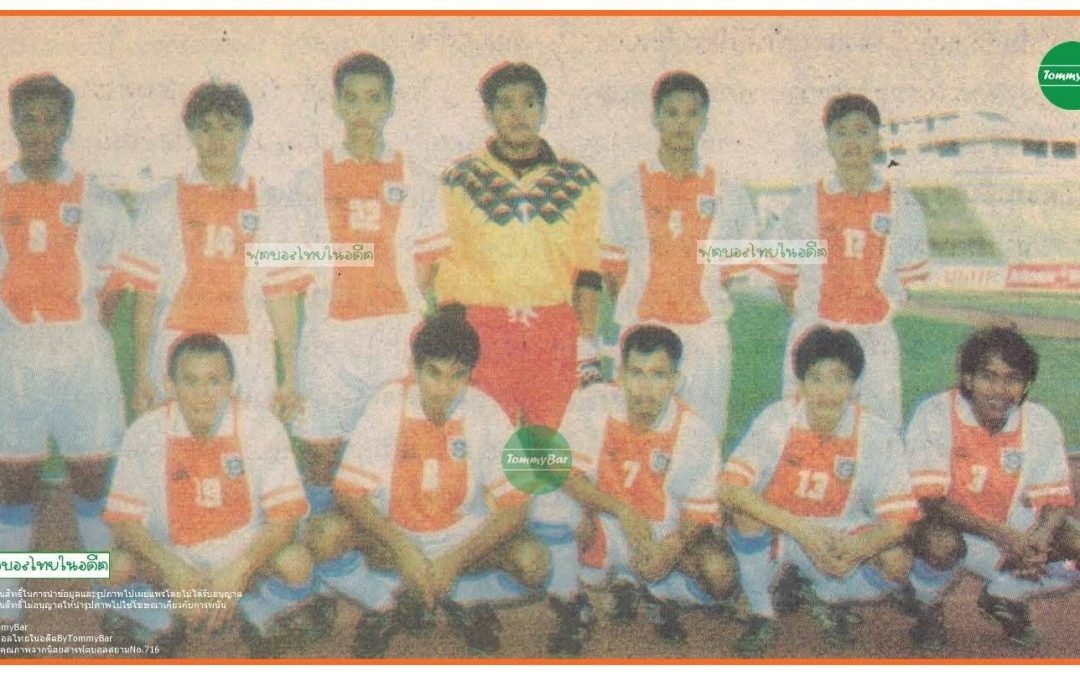
With the 2026-27 season now underway, it felt like the right moment to look back and reminisce about a different era — one before the shift to a Western calendar and the days when a starting XI might feature seven Brazilians.
Thirty years ago, Thai football looked less like a professional pyramid than a fiercely competitive civil service sports day. When the inaugural Thai Premier League kicked off in the 1996-97 season, the idea of the "provincial powerhouse" was pure fantasy. Buriram United were a glint in Issan Trump's eye. Chiangrai United did not exist. The pinnacle of the national game belonged instead to banks, military branches and state monopolies.
As the 30th anniversary of that watershed season approaches, it feels like the right moment to take a forensic look back at the original 18 clubs. A handful evolved into modern giants, a few became nomadic punchlines, and most simply ceased to exist, swallowed by economic crashes and the ruthless professionalisation of the modern era. Here is the obituary and progress report for the Class of '96.
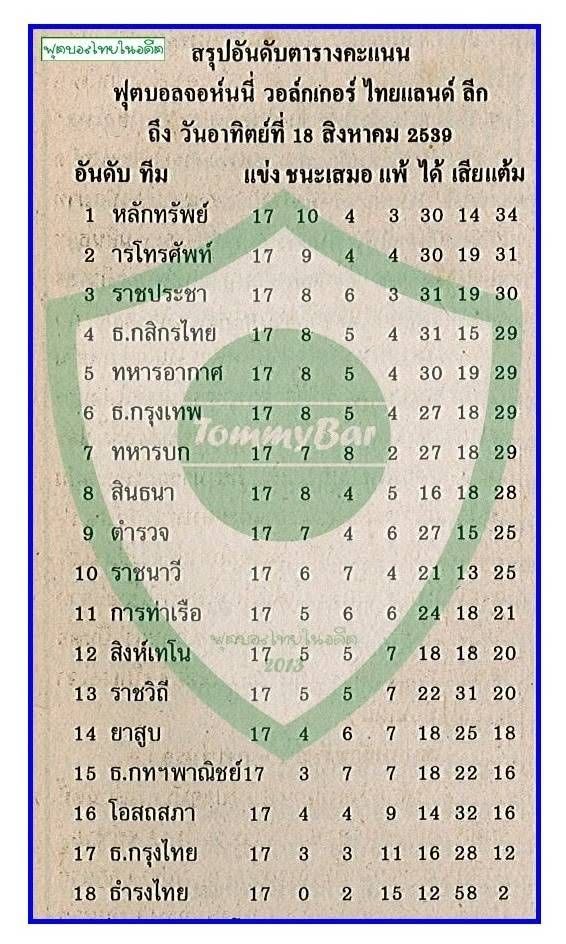
The financial sector: boom, bust and rebirth
To understand the early days of Thai football, start with the banks. They had the capital to hire the best players and offer them secure, pensionable desk jobs alongside their playing careers.
Thai Farmers Bank (ธนาคารกสิกรไทย)
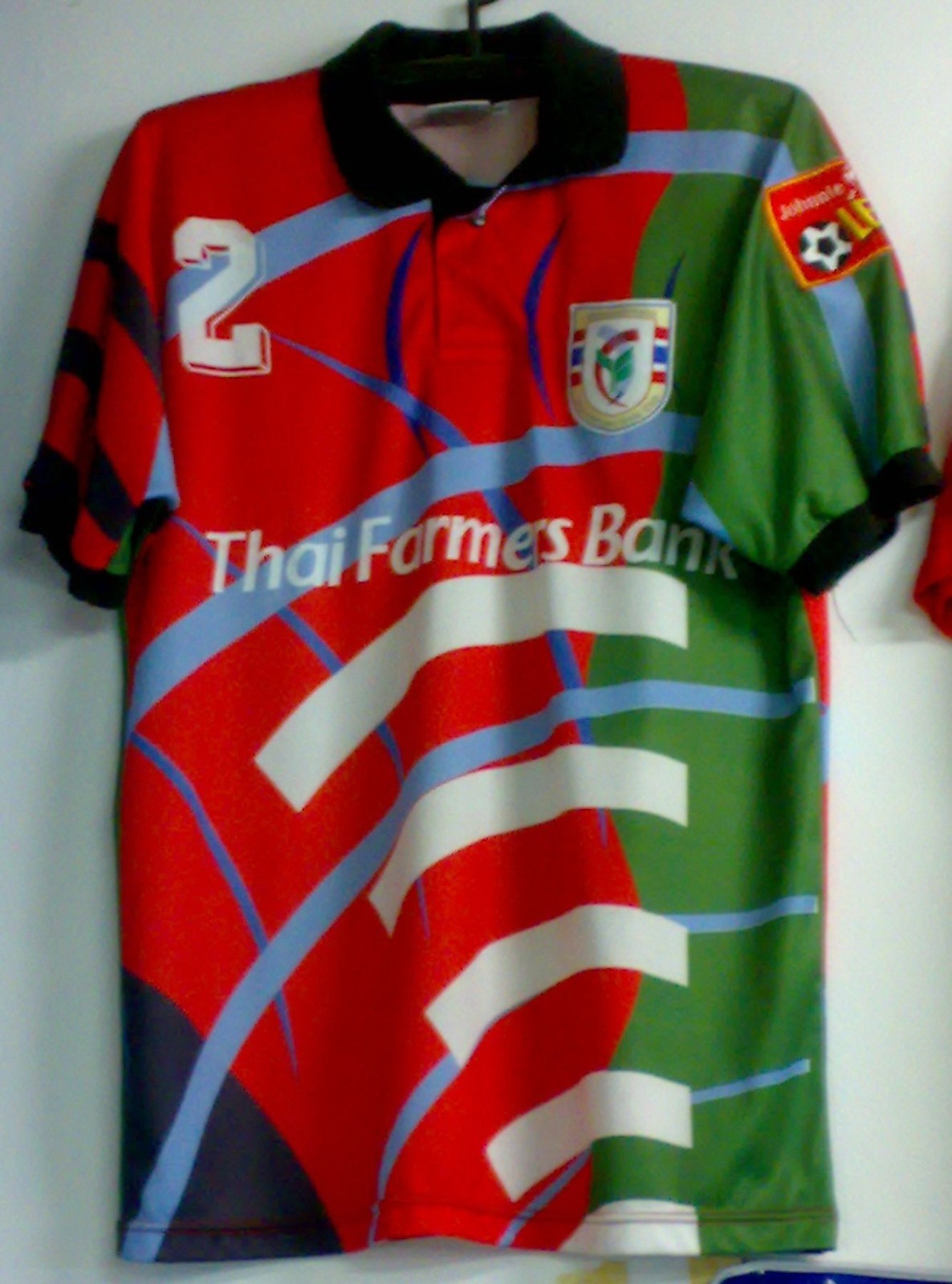
The great tragedy of Thai football history. TFB were not merely domestic heavyweights; they were continental conquerors, winning the AFC Champions League (then the Asian Club Championship) back-to-back in 1994 and 1995 to become the undisputed kings of ASEAN football. When the 1997 Asian financial crisis — the "Tom Yum Kung" crisis — tore through the Thai economy, the bank's sporting vanity project became an unjustifiable expense. The club folded entirely in 2000. The greatest club side Southeast Asia has produced simply vanished.

Bangkok Bank (ธนาคารกรุงเทพ)
The "Bualuang" were historic titans, with legends such as Piyapong Pue-on among their alumni. A foundational pillar of the old Kor Royal Cup era, they carried real pedigree into the early Premier League. But as the competition modernised and billionaire-backed provincial clubs began to outspend the corporates, Bangkok Bank found themselves obsolete. They folded gracefully — or perhaps mercifully — in 2008, declining to navigate the murky waters of modern club ownership.
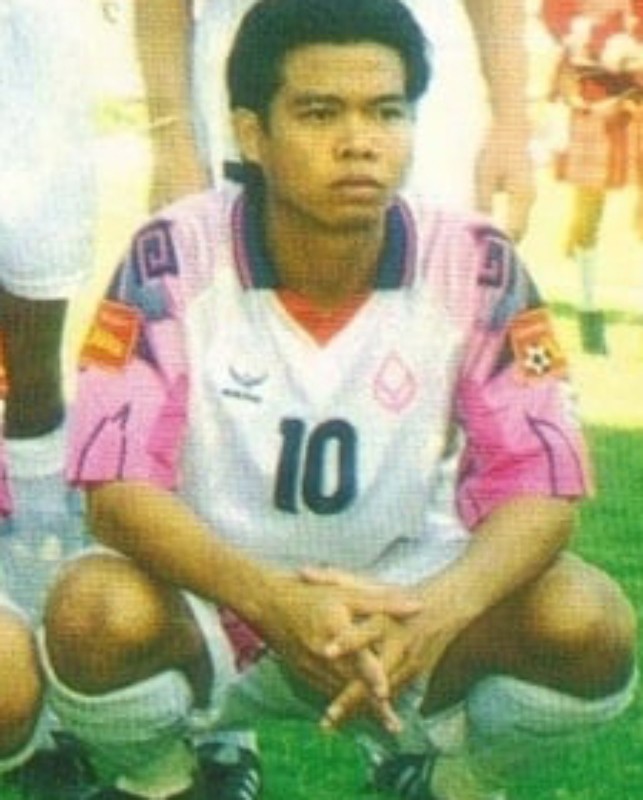

Bangkok Bank of Commerce (ธนาคารกรุงเทพฯ พาณิชย์การ)
If Bangkok Bank's demise was a slow fade, BBC's was a spectacular implosion. The bank itself became the epicentre of the 1997 financial crisis owing to colossal embezzlement and bad loans, which triggered its collapse. A football team rarely survives when its parent company is being liquidated by the state, and the club died alongside the bank.

Krung Thai Bank (ธนาคารกรุงไทย)
The financial sector's sole survival story, albeit via metamorphosis. Krung Thai Bank FC won consecutive league titles in the early 2000s, but with AFC regulations looming that would require clubs to operate as independent commercial entities rather than state-enterprise offshoots, the club sold its licence in 2009. The buyer was the Bangkok Glass Group, and the team became Bangkok Glass FC before eventually evolving into today's (BG) Pathum United.

Stock Exchange of Thailand (ตลาดหลักทรัพย์ฯ)
Yes, the stock exchange had a football team. No, it did not last long. In a league rapidly turning professional, a side representing the national bourse was an administrative oddity that quietly faded into the amateur leagues shortly after that inaugural season.
The state enterprises: monopolies and nomads
Port Authority of Thailand (การท่าเรือฯ)
The great survivor. While other state enterprises collapsed or sold up, Port retained their identity, their fiercely loyal fanbase and their spiritual home at PAT Stadium in Khlong Toei. Now known simply as Port FC and backed by the considerable wealth of the Lamsam family (via Nualphan Lamsam, before her FAT presidency), they are the only original 1996 corporate club to have made the leap to the modern top flight without losing their soul entirely.

Thailand Tobacco Monopoly (พนักงานยาสูบ)
One of the strangest stories in world football. TTM actually won the Thai Premier League in 2005 under Jose Alves Borges. But as anti-tobacco advertising laws tightened, the club became a toxic asset, embarking on a nomadic existence of rebrands and relocations: TTM Samut Sakhon, TTM Phichit, TTM Chiangmai and finally TTM Customs. Stripped of an identity, a fanbase and a home, they were relegated and dissolved in 2015.

TOT (องค์การโทรศัพท์ฯ)
The Telephone Organisation of Thailand were top-flight mainstays for years, renowned for a dogged, defensive style as reliable — and as uninspiring — as a landline connection. As the digital age arrived, the state telecom struggled and the funding dried up. After a disastrous 2015 campaign ended rock bottom, wage disputes and failed licensing criteria followed, and the club folded in 2016.
Osotsapa (โอสถสภา)
Backed by the pharmaceutical and energy-drink giant behind M-150, Osotsapa were perennial mid-table survivors with occasional flashes of brilliance. Like TTM, they tried to survive the modern era by franchising their identity, becoming Osotsapa M-150 Saraburi and then Super Power Samut Prakan. The club hit rock bottom in 2017 with a 27-game winless run, before a doomed rebrand as "Jumpasri United" in Maha Sarakham. The FAT blocked the move over licensing failures, and the historic club was terminated on the spot.
The men in uniform: when the military ruled the pitch
Before Buriram and Chonburi built modern academies, the easiest way to assemble a squad was to conscript one. The military and police sides dominated the amateur era, but professionalisation exposed their limitations.
Royal Thai Air Force (ทหารอากาศ)
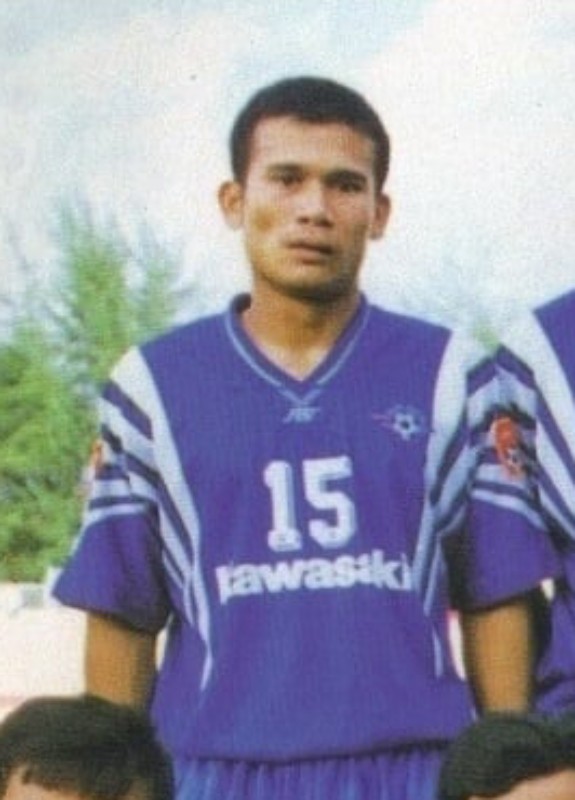
Arguably the standout team of the pre-Premier League era, the Air Force were a terrifying prospect in the 1990s, winning the inaugural 1996-97 title and following it up in 1999. But as player wages soared, a military budget could not keep pace. They rebranded as Air Force Central, bounced between the top two tiers, and in 2019 their owner sold the club's playing licence. It was relocated, and the historic Air Force lineage effectively died to birth Uthai Thani FC.
Royal Thai Army (ทหารบก)
Later known as Army United, the club commanded a loyal following and boasted a fine stadium on Vibhavadi Rangsit Road. They were stable and competitive until 2019, when the then-Army chief, General Apirat Kongsompong, abruptly decided the football team was a drain on resources and suspended operations indefinitely. A 103-year-old sporting institution wiped out by a single executive order.
Royal Thai Navy (ราชนาวี)
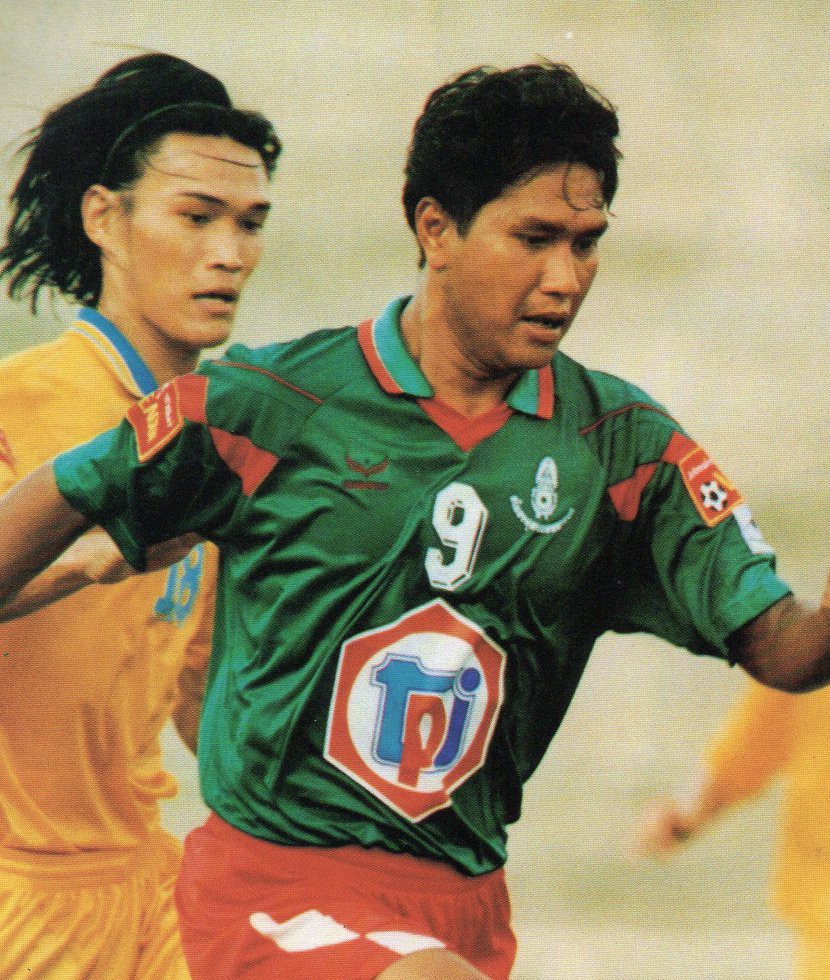
Unlike the Army and Air Force, the Navy never quite hit the heights of league dominance, but they have proved remarkably hard to kill. Based in Sattahip, Navy FC have spent the past decade yo-yoing between divisions. They are currently in Thai League 3, holding on to their identity but a long way from 1996 glory.


Royal Thai Police (ตำรวจ)
The Police club had a proud history but struggled for top-flight consistency. In 2017, in a bid for survival and relevance, Police United merged with fellow original 1996 club BEC Tero Sasana. The resulting side became Police Tero FC.
The institutions and the forgotten
Singha Tero Sasana (สิงห์เทโรศาสน)
Originally Sasana Witthaya, then Singha Tero, they became the mighty BEC Tero Sasana — the "Fire Dragons" who reached the final of the 2002 AFC Champions League. The glamour club of the early 2000s, they nurtured talents such as Chanathip Songkrasin. As above, they merged to become Police Tero, and today find themselves in Thai League 2, fighting for promotion back to the top flight.
UCOM Raj Pracha (ยูคอมราชประชา)
True Thai football royalty, founded by Police Major General Mom Rajawongse Jetjan Pravit. In 1996 they were backed by the telecoms firm UCOM. Long since fallen from the top tier, Raj Pracha still exist, battling away in the lower reaches of Thai League 3 — a shadow of their former selves, but proudly carrying one of the oldest crests in the country.
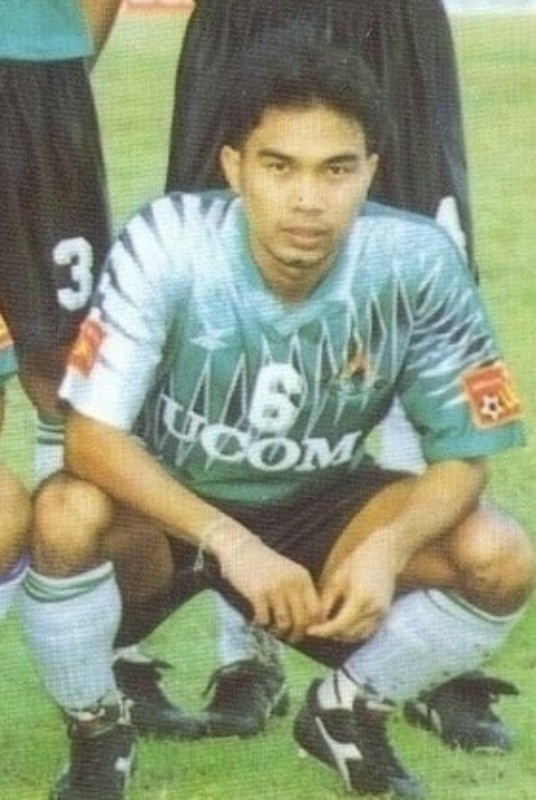
Rajvithi-Agfatech (ราชวิถี)
The "Chao Wang" (Palace Boys) were the most stylish side of the 1970s and 80s, playing a brand of short-passing football that earned them the nickname "Thailand's Arsenal". By 1996 their best days were behind them. They tumbled down the divisions and, despite half-hearted revival attempts in the regional leagues during the 2010s, the club has been functionally defunct for nearly a decade.
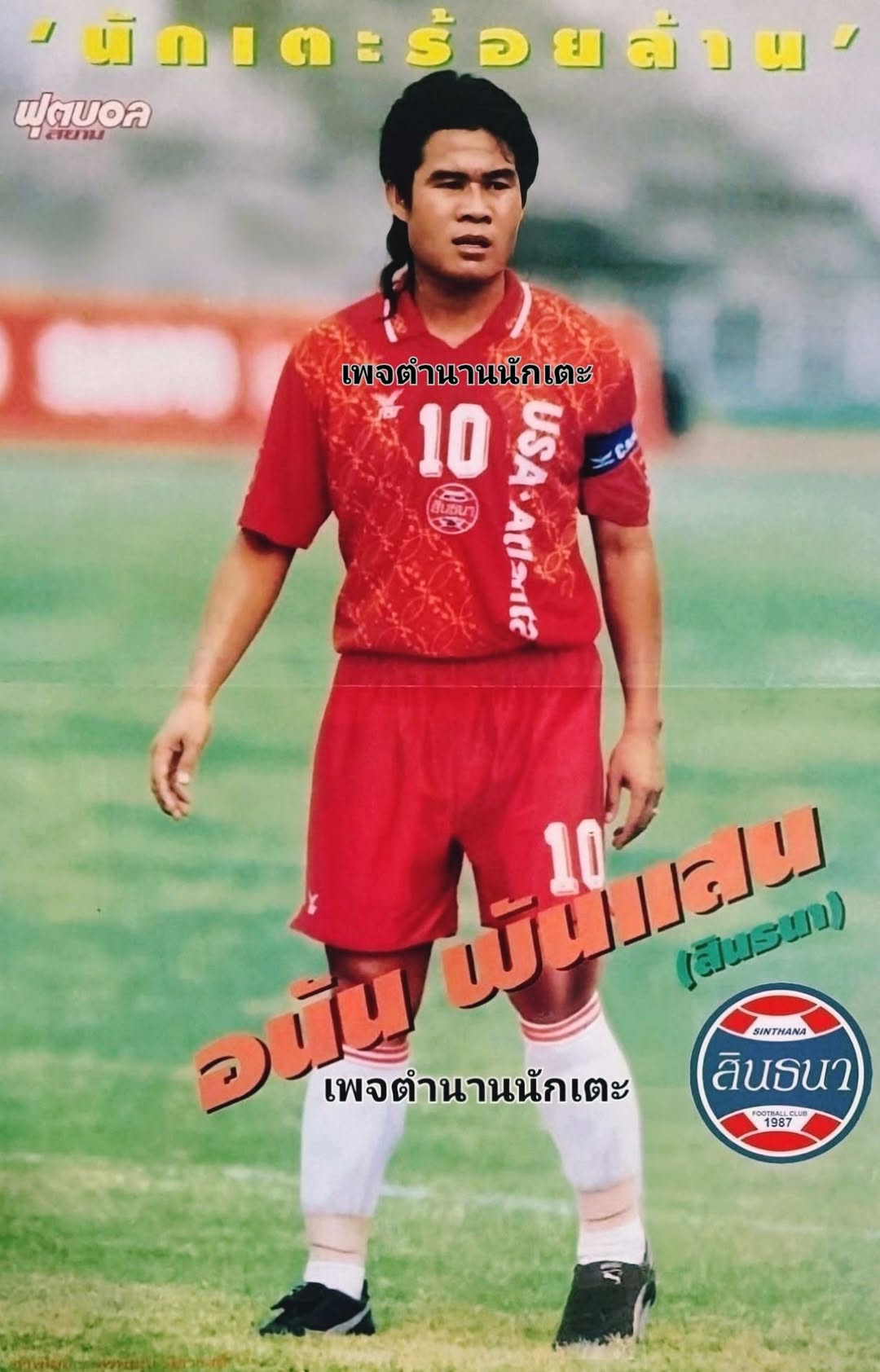
Sinthana (สินธนา)
Sinthana were the great disruptors of the early Premier League era, breaking the corporate-military monopoly to win the title in 1998 with a technically brilliant side. Financial struggles led to a merger with Chulalongkorn University, forming Chula-Sinthana and eventually BBCU (Big Bang Chula United). In 2017, midway through a Thai League 2 season, the ownership simply walked away, withdrawing the team from the league and ending the Sinthana lineage on the spot.
Singha-Thamrongthai (สิงห์ ธำรงไทยฯ)
Thamrongthai Samosorn was a club rooted in youth development and amateur ideals. The brutal reality of the 1996 professional transition proved too much: they were relegated with a record-low points tally in that inaugural season and vanished into the local amateur circuit, never to be seen on the national stage again.
The only two lineages from the original 18 currently competing in Thai League 1.
Hanging on in Thai League 2 or 3, far removed from 1996-97 status.
Folded, merged out of existence, or quietly wound down.
The licence survives; the identity does not.
A final thought
Looking back at the original 18 is an exercise in sporting archaeology. Of the clubs that took to the pitch in 1996-97, only one — Port FC — remains in the top flight bearing any real resemblance to its original identity. Another, Krung Thai, traded its soul to become Pathum United. The military clubs have been sold or shuttered, the banks went bust, and the state monopolies were legislated out of existence.
The 1996-97 season was not just the birth of the Thai League. It was the start of an extinction event for the old establishment — one that cleared the ground for the very different much more provincial landscape we see today.
With thanks to the Thai Football Database for preserving the meticulous records of this era. Their archive, including original photographs from the 1996 season, can be found on their Facebook page.
 Buriram United
 Rayong
 Uthai Thani
 Prachuap
 Bangkok United
 Port
Port Ayutthaya United
 Pathum United
 Ratchaburi
 Chiangrai United
 Pattani
 Sukhothai
 Sisaket United
 Rasisalai United
 Lamphun Warrior
 Chonburi