15 September 2026
Simon Causton is co-host of The Port In Any Storm Podcast.
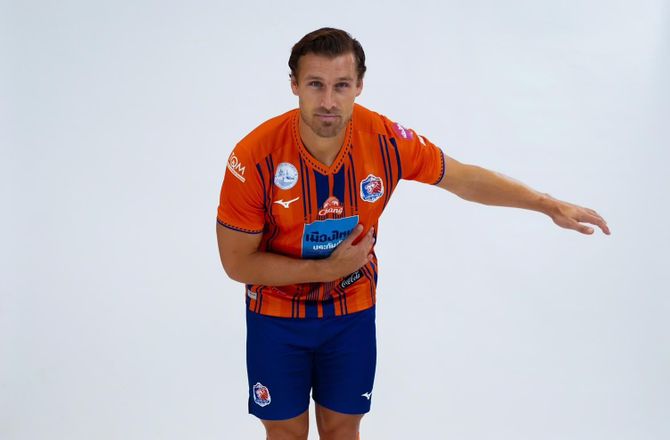
Ten minutes into a conversation about centre-back positioning and rest-defence structures, Erik Sviatchenko stops mid-sentence, almost apologetically, as if catching himself doing something faintly indulgent. “I mean, you talk like someone who’s got a future in management ahead of you,” is the observation that provokes it. “Who knows?” he says, and grins, and carries on anyway — because carrying on, it turns out, is rather the point of Erik Sviatchenko.
At 34, with close to 500 professional appearances behind him and a coaching brain that seems to arrive pre-installed, Port FC’s newest centre-back talks less like a player filling in time before retirement than like a man auditioning for his next career while still very much excelling at his current one. It makes him one of the more compelling additions of Port’s busy summer — not for what he might offer with the ball at his feet, though there is plenty of that too, but for what he might offer everyone around him.
From Viborg to the Invincibles
The biography, when you lay it out, reads like a case study in doing things the hard way and doing them well. Born in Viborg to Ukrainian parents who had settled in Denmark, Sviatchenko moved into FC Midtjylland’s youth set-up as a 14-year-old and worked his way through to become the club’s Academy Player of the Year, then a first-team regular, then — at 21 — vice-captain. He would go on to make 325 appearances across two spells at Midtjylland either side of a stint at Celtic, becoming the club’s second most-capped player, scoring 32 goals from centre-back, and winning the Danish Superliga Player of the Year award twice, in 2015/16 and again in 2019/20.
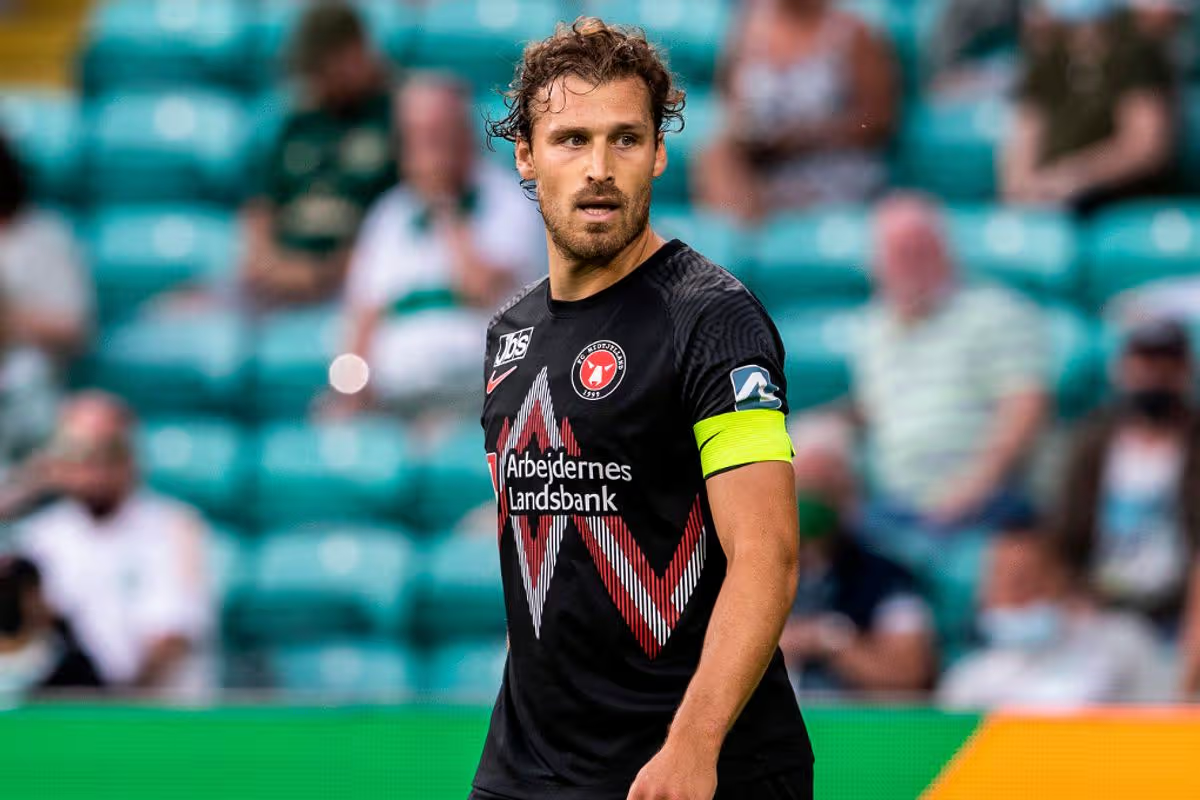
The Celtic years, 2016 to 2018, remain the standout entry on the CV: Sviatchenko was vice-captain during the club’s historic 2016/17 “Invincibles” campaign, when Celtic went the entire domestic season unbeaten and won the treble. Five caps for Denmark followed, including a debut in a 3-2 win over the United States — a fixture he could scarcely have imagined would loop back into relevance nine years later, on the other side of the world, in a league few of his old teammates could find on a map.


“Thailand was not on my radar for that matter in a long time,” he admits, in an accent that has picked up faint transatlantic edges after three seasons at Houston Dynamo. He had other options this summer — a return to Denmark, other MLS suitors — when an approach from another Thai League 1 club fell through a few months back. Then, with a week left before the transfer window closed, Port came calling. “I speak with Michael, and pretty rapidly I kind of go towards this adventure,” he says, referring to fellow Dane and Port goalkeeper Michael Falkesgaard, whose own path from Scandinavia to Southeast Asia clearly made for a persuasive phone call.
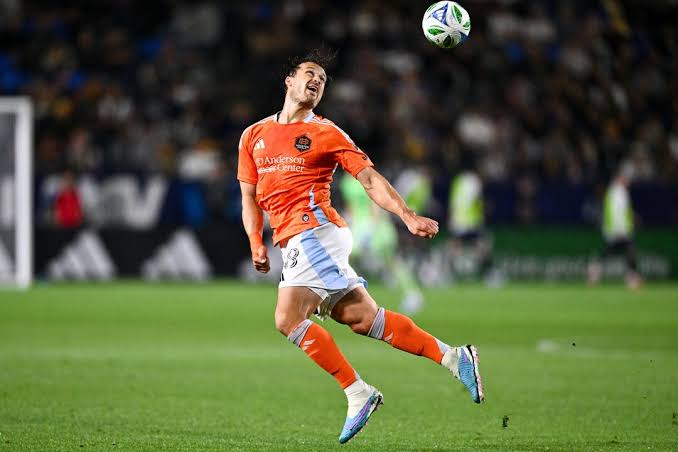
The decision, he says, was a family one, made mid-trip with Houston Dynamo. “I call my wife, I call my kids and say, what do we think here?” It was, by his own admission, a leap into the unknown — “somewhere we have no base and background of knowing anything” — but one he frames as entirely in character. “Football is a universal language, and I know I can play football, and I know my family, and I am strong. We’ll adjust.”
The nerdy details
Ask Sviatchenko to describe himself as a player and the answer arrives fully formed, the way it does for someone who has clearly been asked the question — and asked it of himself — many times before. “I’m very vocal, very demanding,” he says. “I want everything around to be as good as possible. I want the players around me to feel that they’re valued and seen.” He is, by preference, a right-sided centre-back in a back four, comfortable stepping into midfield with the ball, someone who — in his words — can “see through lines” and “make the breakthrough ball.”
But it’s when he moves from technique to structure that the conversation starts to sound less like a player profile and more like a coaching seminar. Thai League 1, he suggests with the polite bluntness of a newcomer still forming his opinions, is a division that plays with real intensity but not always real control. “It becomes quickly a very, very transitional game, and then it becomes a game of coincidence instead of us at home controlling a game for ninety minutes.” What Port need to develop, in his assessment, are “all nerdy things” — rest defence, game management, the unglamorous structural work that turns a talented squad into a hard-to-beat one.
It’s a theme he returns to more than once: the gap between Port’s individual quality — “a Kaka on our team, very technical, high level” — and its collective control of matches. His prescription is patience allied to organisation. “We game by game glue together and start showing this quality that we have individually as a collective,” he says, before adding, with the specificity of someone who has clearly thought about exactly this scenario before: “Knowing when to kind of stick the knife in and say, can we score the third goal? Or is it a game where we just kind of control the game and win 1-0? That’s maybe my job — to see if I can come in with that experience.”
Arm around the shoulder
Where Sviatchenko sounds most like a coach in waiting, though, is when the subject turns to man-management rather than tactics. Asked directly about the leadership role he’s stepping into — a Port dressing room he reckons contains “five or six captains” already — he describes an approach built on reading people rather than imposing on them.
“My job here is to learn people, how they work, what ticks them, what doesn’t. Is it an arm around their shoulders? As I understand the Thai players and the culture, it’s a bit more that way — you take them aside and you tell them, hey, this is amazing from you, maybe you can think about this. I’m not here to position myself as anything above anyone else, but I know what I have to bring, and I know that I have so much experience, and people can lean on me when it comes to the games and comes to the locker room.”
It’s a philosophy he applies to himself just as rigorously. Asked what still motivates him at 34, with titles won and countries crossed, he doesn’t reach for comfort. “I still feel like, especially my last time in Houston, where I was definitely good enough to start every game, but sometimes coaches have decisions,” he says, with a frankness that says more about his character than most players would risk revealing. “So I was just hungry to go out and play.” The restlessness, rather than fading, appears to have found a new outlet in the size of the challenge in front of him. “I’m a guy that always, no matter where I’ve been, for five minutes I want to be remembered, I want to change things, I want to help out, I want to optimise things.”
Ambitions, personal and collective
On the club itself, Sviatchenko is admiring but clear-eyed. He’s struck by facilities that lag behind what he’s used to — “something I have never witnessed in my career,” he says, choosing his words carefully — but equally struck by an atmosphere at PAT Stadium that, after the more sedate crowds of MLS, has clearly got under his skin. “I’ve missed that for many years,” he says of the noise. “It’s an inferno of maybe six to eight thousand people, but it’s packed and it’s loud for ninety-plus minutes.” He talks, unprompted, about meeting English expats at half-time who’d become Port supporters simply by proximity — the kind of detail that suggests a player who has been paying closer attention to his new surroundings than two and a half weeks would strictly require.
The ambition, when he states it, is uncomplicated: improve on a runners-up finish that ended ten points behind the champions, and win something. “Aspirations is always to win. To be remembered,” he says. “Second place last year, ten points behind — I think this year we can do better, and hopefully compete for that.” On a personal level, his target is simpler still: minutes. “Play as many games as possible, and show that I can be a big asset to the team — and hopefully score some goals on the back stick as well.”
He is, at the time of writing, expected to make his Thai League 1 debut this week. Whether that happens on Wednesday or shortly after, Port supporters are unlikely to have to wait long to see whether the calm authority that runs through every answer in this interview translates onto the pitch. If it does, Port may find they’ve signed not just a centre-back, but the outline of whoever eventually succeeds Coach Oud in the dugout.
Port play Vissel Kobe at 19:15 on Wednesday 16th September in the AFC Champions League Elite, and resume Thai League 1 action away at Sukhothai on Sunday 20th September at 18:30.
 Buriram United
 Rayong
 Uthai Thani
 Prachuap
 Bangkok United
 Port
Port Ayutthaya United
 Pathum United
 Ratchaburi
 Chiangrai United
 Pattani
 Sukhothai
 Sisaket United
 Rasisalai United
 Lamphun Warrior
 Chonburi