There is no glory in pawning the family silver just to keep the lights on. Yet, on the eve of their inaugural Thai League 2 campaign, this is exactly what Muangthong United have been forced to do to avoid the ultimate humiliation.
As the clock ticked down towards a devastating administrative forfeit against newly-promoted Uttaradit FC, the club hierarchy finally pulled the emergency cord. On 2 September, the Kirins’ most bankable asset—and perhaps their last remaining beacon of genuine on-pitch optimism—was sacrificed.
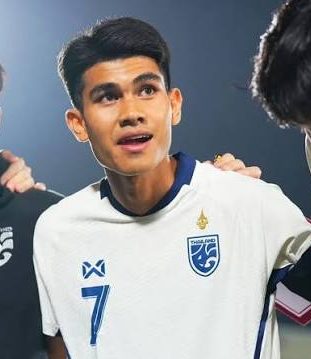
Thai national team midfielder Kakana Khamyok has been sold to Bangkok United for a reported 20 million baht.
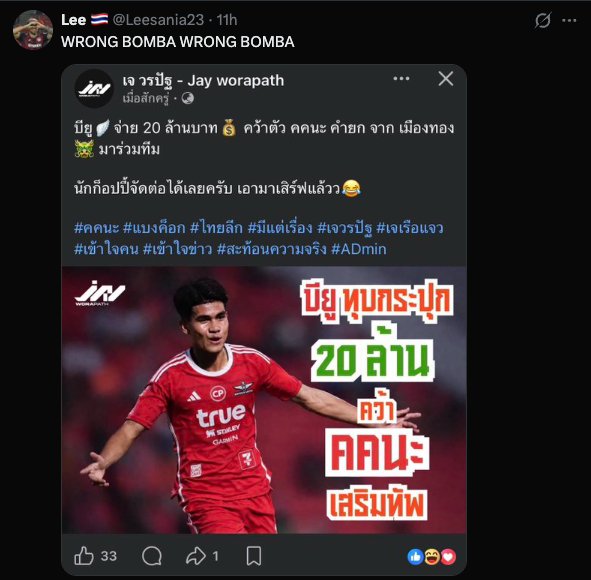
It is a massive financial lifeline, one that has seemingly pulled the club back from the absolute brink. Reports indicate the cash is being swiftly rerouted to clear the club’s outstanding debtors, effectively wiping their slate clean in the FIFA system. The crippling five-part transfer embargo that hung over the Thunderdome is finally lifting. The likes of Jaroensak Wonggorn and Streli Mamba will, mercifully, be eligible for registration ahead of Match Week 2’s home tie against Nongbua FC.
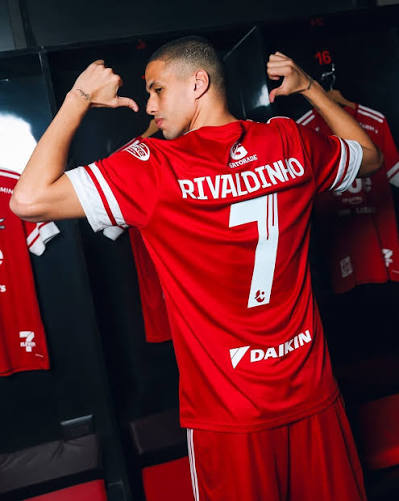
But the depth of Bangkok United's intervention is staggering. Not only did they provide the cash injection to secure Kakana, but the capital club has essentially put Muangthong on sporting life support. In a move that underscores the sheer desperation at the Thunderdome, Brazilian forward Rivaldinho—the son of footballing royalty and World Cup winner Rivaldo—has joined the Kirins on loan. The kicker? Bangkok United are reportedly covering his entire salary.
It is a humiliating reality for a club that once considered itself the undisputed king of Thai football, now reduced to relying on the charity of a domestic rival to field a competitive forward line in the second tier. Let us not mistake a frantic bailing of water for a sustainable navigational strategy.
Selling your crown jewel merely to pay the electricity bill and avoid a league disqualification is not a business model; it is a fire sale. It is telling that the club’s new home kit for the 2026/27 campaign was hurriedly announced on the exact same day as Kakana's departure. What should have been a proud, pre-season cornerstone instead felt like a frantic afterthought, a basic operational launch seemingly held hostage until the Bangkok United cheque had cleared the bank.
It forces a chilling hypothetical: what would have happened if that sale had fallen through?
Had Bangkok United not played the role of the eleventh-hour benefactor, Muangthong would have been entirely incapable of fielding a legal squad this Friday. They were staring down the barrel of Disciplinary Rule 3.2, facing a 3-0 administrative forfeit. That kind of highly public declaration of insolvency is a death knell in modern football. It would have undoubtedly triggered exit clauses for whatever disillusioned sponsors remain, caused the dressing room to permanently fracture over unpaid wages, and likely sent the club into the exact same terminal, mid-season death spiral that destroyed Samut Prakan City just over a year ago.
The Kakana sale and the subsidised arrival of Rivaldinho do not hide the profound apathy of the ownership. They merely buy them a few more weeks of silence.
Muangthong United has survived the week. The immediate bureaucratic guillotine has been stayed. But a football club is only as vibrant as the leadership steering it. The ghost ship drifts on into the uncharted waters of Thai League 2, avoiding the rocks for now.
But as the hull continues to creak, and the assets continue to be stripped, it leaves us with one glaring question: is there actually anyone competent at the wheel?
 Buriram United
 Rayong
 Uthai Thani
 Prachuap
 Bangkok United
 Port
Port Ayutthaya United
 Pathum United
 Ratchaburi
 Chiangrai United
 Pattani
 Sukhothai
 Sisaket United
 Rasisalai United
 Lamphun Warrior
 Chonburi