
In the Deep South, Pattani FC’s new offshore CFD sponsor exposes the hypocrisy of football's stance on gambling.
In Thailand, the moral guardrails surrounding football sponsorship are, on paper at least, impressively rigid. The nation’s legislative framework takes a famously paternalistic stance against traditional vices, a philosophy echoed by the Football Association of Thailand. Under the longstanding Gambling Act of 1935, almost all forms of betting are strictly prohibited, while the recently enacted Alcoholic Beverage Control Act (No. 2) B.E. 2568 explicitly outlaws the sponsorship of sports events by alcohol brands.
The governing logic behind these bans is entirely sound: football clubs are community pillars and should not serve as billboards for societal harm or addiction. Yet, a glaring regulatory blind spot has just been exposed in the Thai Deep South.
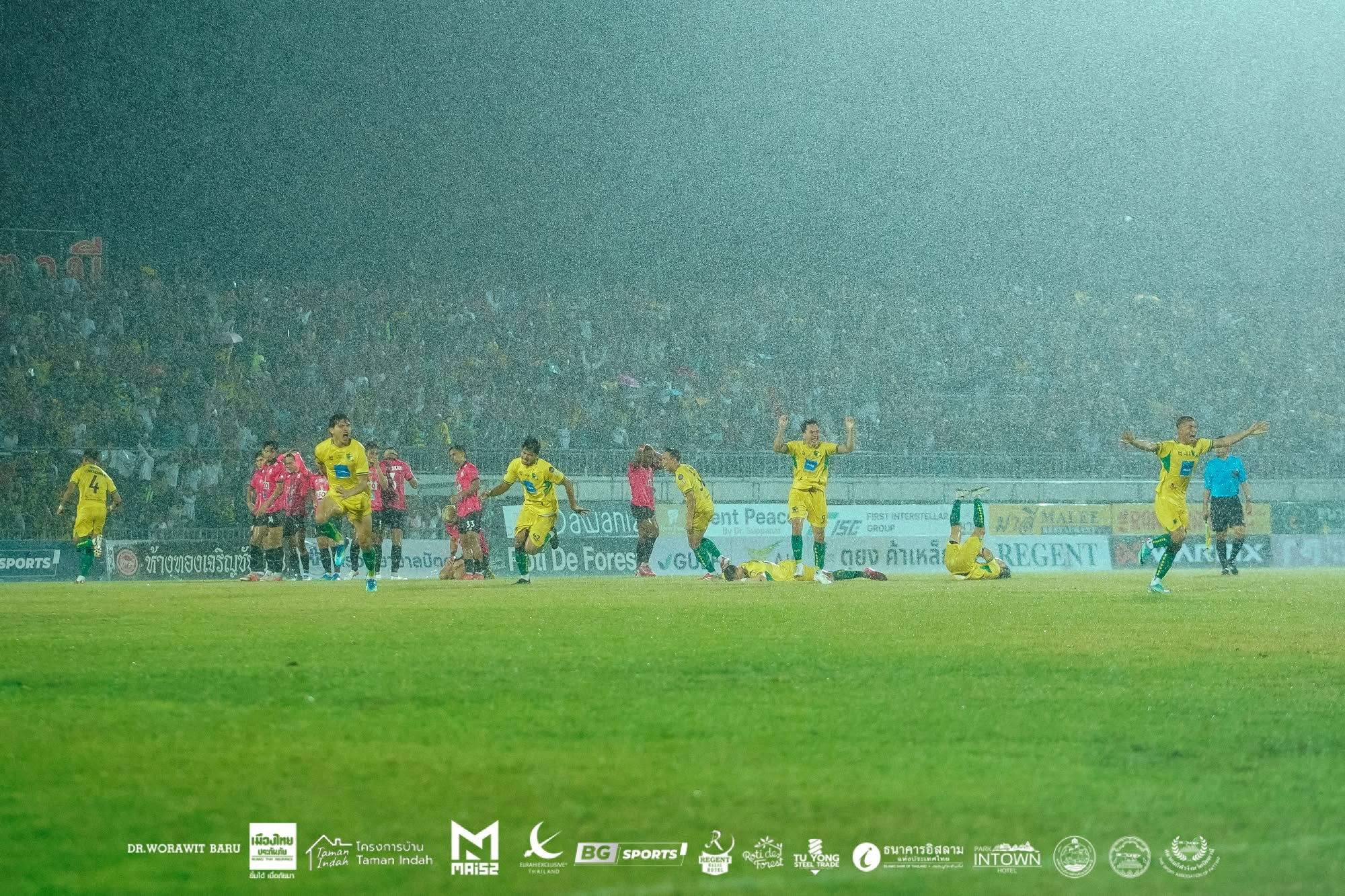
Pattani FC has proudly unveiled a front-of-shirt sponsor whose underlying business model sits uncomfortably close to the very vices the sport claims to prohibit. The sponsor in question, First InterStellar Group (FISG), is plastering slogans promising a "Victory Season" over aggressive, lightning-streaked graphics. But behind the slick marketing lies a financial broker dealing heavily in Contracts for Difference (CFDs).
For the uninitiated, a CFD is a high-risk retail derivative that allows speculators to bet on the price movement of an asset without ever actually owning it. It is, in essence, a digital casino for the global financial markets. In practice, there is a razor-thin distinction between placing a wager on a weekend fixture and taking a highly leveraged short position on a foreign currency pair. Both are addictive, zero-sum wagers where the house invariably wins.
Advertising this alternative form of gambling should unequivocally be treated the same as promoting sports betting. FISG operates from offshore tax havens—registered in St. Vincent and the Grenadines—aggressively marketing retail financial products that are so inherently fraught with danger they are outright banned or heavily restricted for retail investors in major jurisdictions like the USA, Canada, and France. Yet, because offshore CFD trading hides behind the respectable veneer of 'financial services' rather than donning the neon lights of a sportsbook, it slips quietly through the FAT’s regulatory net.
The hypocrisy of the FA’s position is bad enough, but the local context turns this into a profound cultural misstep. Thailand is not an Islamic state, but the Deep South—particularly the Pattani region—is a uniquely devout, predominantly Muslim enclave. Pattani FC’s identity is inextricably linked to this deeply faithful fanbase.
By allowing this sponsorship, the club are ignoring Islamic law, which strictly classifies conventional retail derivatives trading as haram (forbidden). These contracts rely on highly speculative future outcomes rather than direct, transparent asset ownership, violating the principle of gharar (excessive uncertainty). Furthermore, trading price directions without intending to take physical delivery breaches the rules against maisir (gambling), while the overnight financing charges inherent in margin trading violate the strict prohibition of riba (interest).
If Thai football is genuine in its desire to protect fans from the financial ruin of gambling, it must categorise high-risk retail speculation exactly as what it is: betting in a bespoke suit. Instead, a failure of regulatory imagination has placed the Pattani faithful in the deeply unenviable position of cheering for a team whose very shirt promotes a practice their faith explicitly condemns.
Next tour: Port v Rayong
Saturday 24 October 2026 · ฿3,900 ฿2,999 per person, all inclusive. Ticket, private transport, pre-match briefing and a guide who knows the league inside out.
Book Your Place → Buriram United
 Uthai Thani
 Bangkok United
 Prachuap
 Port
Port Ratchaburi
 Rayong
 Ayutthaya United
 Sisaket United
 Pathum United
 Chiangrai United
 Pattani
 Sukhothai
 Rasisalai United
 Lamphun Warrior
 Chonburi