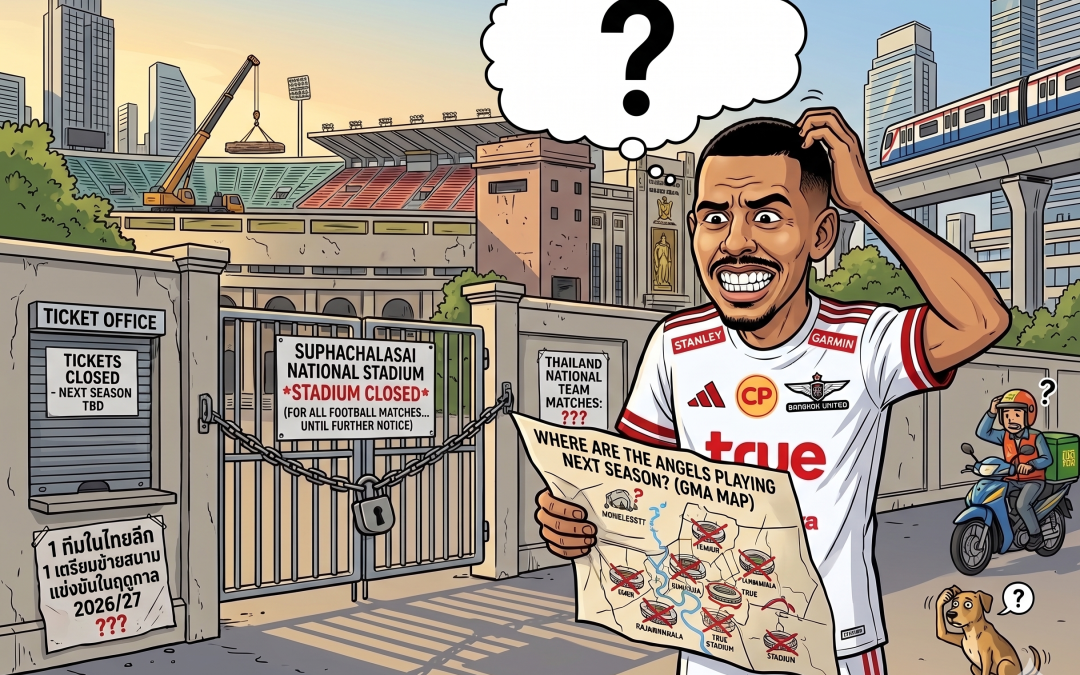
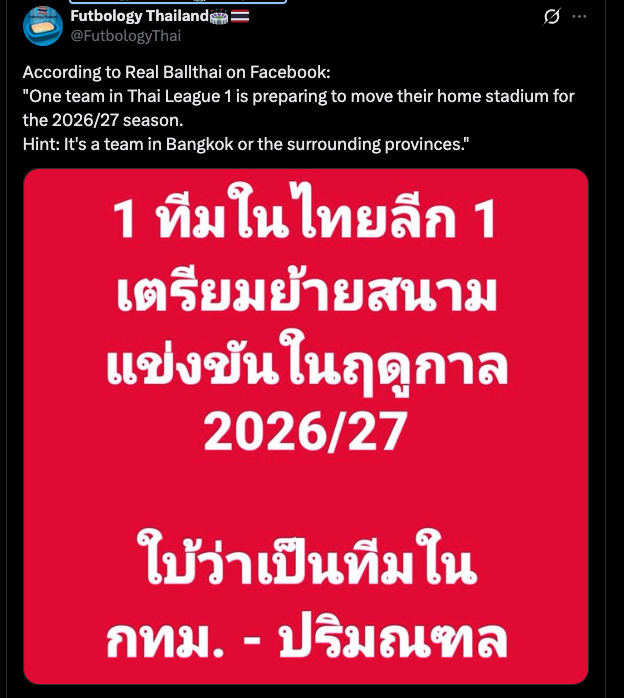
A cryptic graphic, painted in arresting red, has set the Thai footballing digital sphere alight this week. Published by the news portal Ballthai, the brief text merely teases a relocation: a Thai League 1 club located in "Bangkok or its surrounding provinces" is preparing to move stadiums for the 2026/27 campaign. While an accompanying visual deliberately baited fans with a render of Bangkok FC's Bangmod home, the Firebulls’ recent relegation to the third tier immediately renders that a mischievous red herring. By simple process of elimination and a cursory glance at the dire attendance statistics of the current season, the true subject of the rumour emerges with blinding clarity: True Bangkok United.
The Angels are a club suffering from a profound identity crisis, one exacerbated by a protracted exile from the very city they purport to represent. To understand the gravity of their current predicament, one must trace their geographical drift. You have to rewind to the 2009 and 2010 seasons to find the club truly embedded in the capital, operating out of the Thai-Japanese Stadium in Din Daeng. It was central, accessible, and uniquely 'Bangkok'. Yet, the pursuit of grander facilities and AFC compliance drove them north to the Thammasat Stadium in Rangsit. It is a functional venue that, while technically in Pathum Thani, served as an adequate, if uninspiring, base for nearly a decade.
However, it was the catastrophic groundshare implemented ahead of this current 2025/26 season that truly severed the club’s connection with its core demographic. Relocating to the True BG Stadium to share with BG Pathum United was pitched as a strategic corporate synergy. In reality, it has been an unmitigated disaster for matchday culture. Current data places Totchtawan Sripan’s side dead last in Thai League 1 for home support, drawing a thoroughly depressing average of just 2,083 fans. Parachuting a capital-branded franchise into the heartland of a rival provincial club has predictably flatlined the fanbase.

The Golden Maxim and The Corporate Irony
In commercial real estate, the golden maxim has always been 'location, location, location'. In the tribal world of professional football, the concept is even more vital: a club’s geographical footprint is its very soul. It is an absurdity that a team branding itself as the premier club of the capital city requires its supporters to endure a miserable, hour-long slog up the Don Mueang Tollway into the outer rim of Pathum Thani. It is high time the boardroom mandarins accepted a simple truth: for a team named Bangkok United to possess a shred of authentic identity, they must actually play in Bangkok.
This geographical apathy is compounded by the club's staggering commercial lethargy. It remains one of Thai football’s most glaring ironies that True Bangkok United is bankrolled by True Corporation—a telecommunications and media behemoth with unparalleled reach across Thai broadcasting and digital spheres—yet the club’s own marketing efforts are woefully inept.

The recent AFC Champions League Two semi-final against Gamba Osaka offered a tantalising glimpse of what could be, but it also exposed the club's reliance on gimmicks over genuine brand building. Forced to temporarily relocate to the Rajamangala National Stadium, the club implemented an aggressive ticketing and promotional experiment that yielded a highly commendable crowd of 13,000. It proved that the appetite for elite football exists within the city limits. However, relying on the crutch of a heavily subsidised, event-driven matchday to draw a crowd is not marketing; it is a desperate giveaway. True has failed entirely to cultivate a tribal loyalty or a compelling matchday narrative. If they applied a fraction of the aggressive, targeted marketing acumen used to sell 5G data plans to selling season tickets and building a community, the Angels might actually possess a congregation.
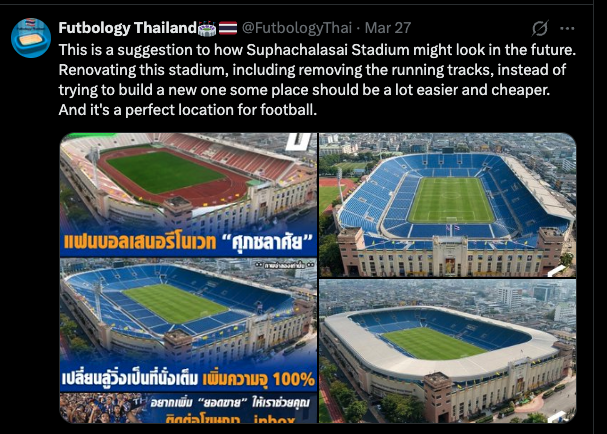
Despite the stark realities of domestic apathy, the Rajamangala anomaly has poured petrol onto the fires of fan romanticism. The prevailing dream among the Bangkok United faithful is a permanent relocation to the Suphachalasai National Stadium. Planted in the bustling heart of the city, adjacent to the MBK Center, it offers unparalleled transit links. Supporters argue that a captive, city-centre audience would generate massive, sustainable revenue streams through matchday merchandise and food and beverage sales.
Yet, a forensic look at all the viable options reveals the vast chasm between romantic ambition and pragmatic corporate strategy. If Kajorn Chearavanont is indeed preparing to sanction a move, the dossier of potential venues makes for sobering reading:
Bang Mod (72nd Anniversary Stadium)
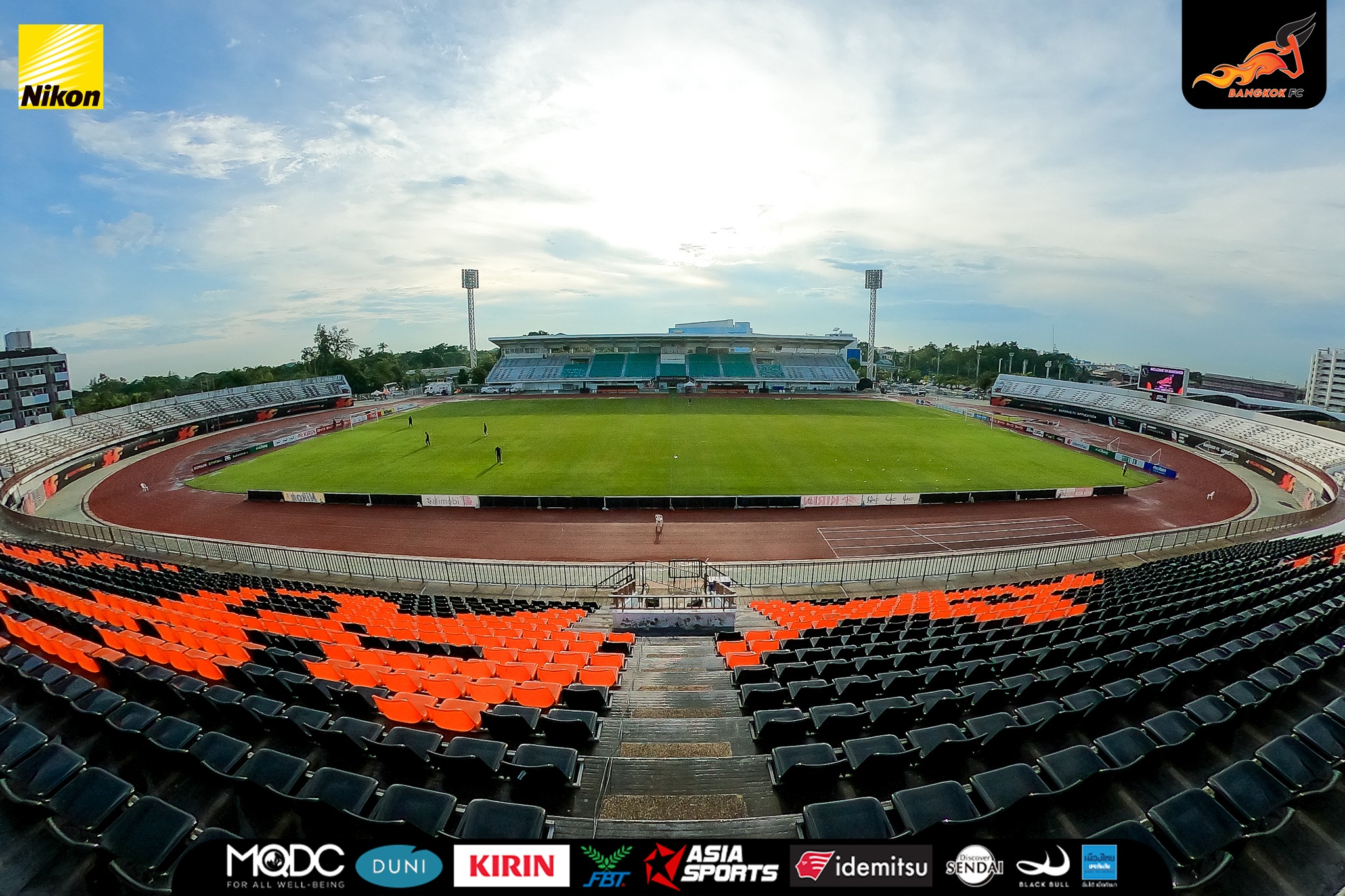
The revelation that makes absolute sense of the initial cryptic graphics. As astutely pointed out by the ever-reliable Port FC Sandpit, the true plan appears to involve a corporate swallowing of Bangkok FC. With rumours swirling that the Firebulls are disbanding after their relegation, True Bangkok United are poised to merge or assume their territory, moving into the 72nd Anniversary Stadium in Bang Mod. It solves the geography problem instantly, giving them a genuine southern Bangkok footprint to claim as their own. Will the lingering central fanbase, combined with whatever supporters they can drag down from Rangsit, be enough to fill it? That remains the million-baht question, but it undeniably turns the initial 'red herring' graphic into a startlingly accurate prophecy.
Suphachalasai National Stadium
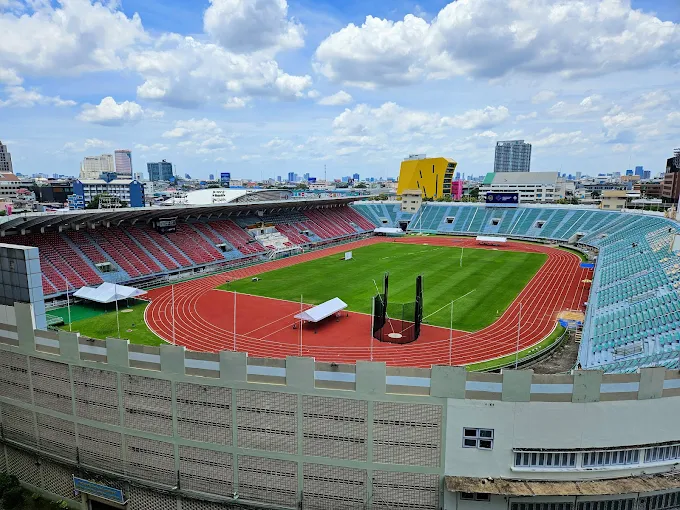
The romantic choice. Planted right in the commercial heart of the capital, it offers unbeatable transit links and a genuine metropolitan identity. However, it is owned by the Department of Physical Education and operates as a massive cash cow for stadium tours and K-pop concerts. It lacks bespoke VIP hospitality suites, and fans remain separated from the pitch by an intrusive running track.
Rajamangala National Stadium
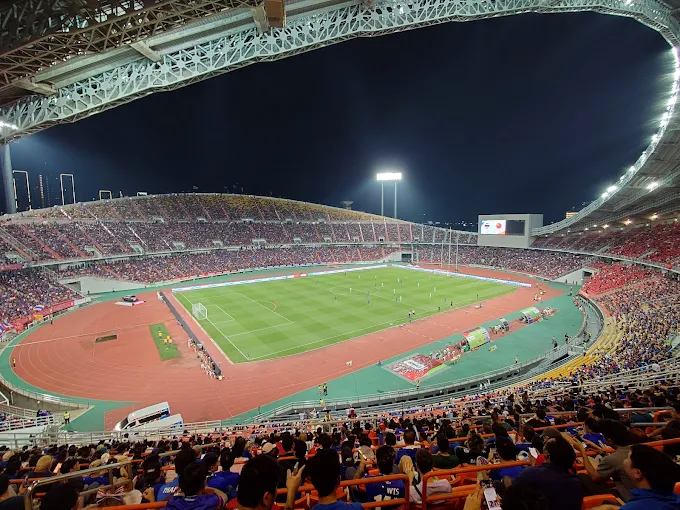
The ultimate statement of corporate intent, capitalising on the venue that hosted their recent Gamba Osaka clash. While unmatched in scale, it would be a vast, soulless cavern for domestic league games. A crowd of 2,500 turning up for a mid-week fixture would look utterly depressing on television. Furthermore, it is astronomically expensive to rent and constantly burdened by non-sporting events.
Thammasat Stadium
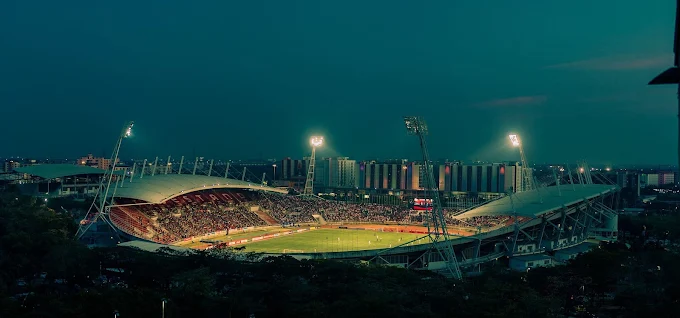
The pragmatic retreat. Returning to the venue they called home from 2015 to 2025 represents a public admission that the True BG Stadium groundshare was a catastrophic failure. Yet, it offers familiarity, AFC-compliant infrastructure, and a venue the club knows how to operate efficiently. Its major failing is that it remains out in the northern suburbs, entirely failing to solve the core issue of 'location, location, location'.
True BG Stadium

The disastrous status quo. Remaining here for a second season is commercial suicide. The Angels cannot continue to operate in front of two thousand empty blue seats and expect to retain their status as a heavyweight of the Thai game.
Thai-Japanese Stadium
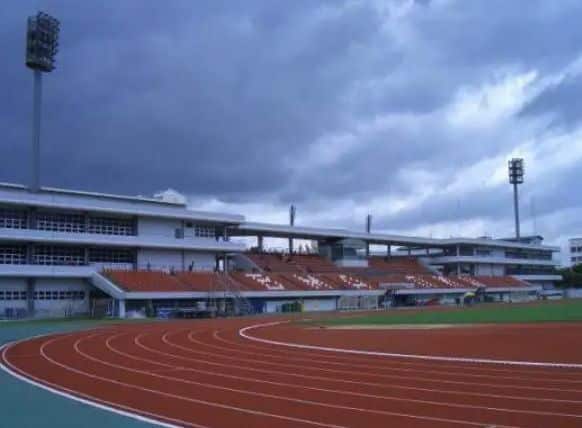
A return to the club's geographical roots, having played here during the 2009 - 2015 seasons. It offers a genuine "Bangkok" identity. However, the infrastructure is heavily dated, the capacity is highly restrictive, and the multi-purpose design includes a running track that kills the intimate matchday atmosphere expected in a modern venue.
Thaklong Town Municipality Stadium
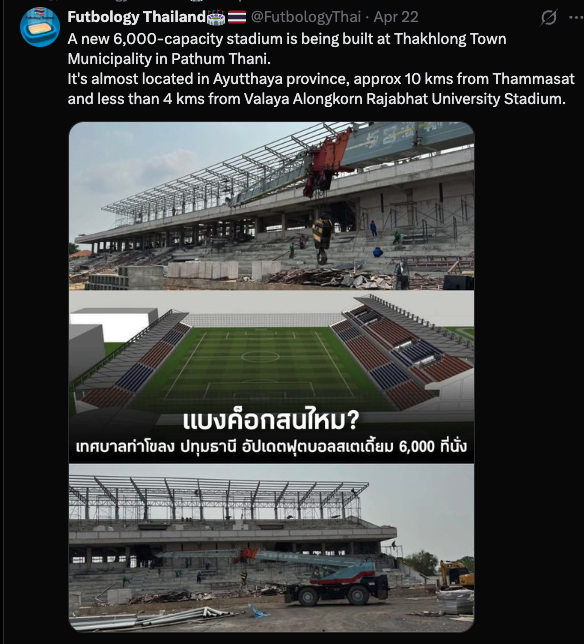
The ultimate fresh start, utilising a newly constructed stadium just 10 kilometres from their old Thammasat base. It bypasses the bureaucratic nightmare of renting state-owned athletics bowls. However, moving here confirms the club has given up on central Bangkok entirely, moving further away from their namesake city.
Bangpu Stadium
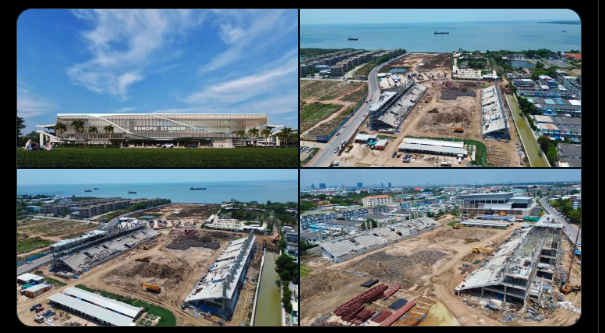
The coastal retreat. Taking over this sprawling, multi-phase stadium project offers the allure of fresh infrastructure, and Samut Prakan technically falls within the "vicinity" parameters of the rumour. Yet, parachuting a corporate, Bangkok-branded entity into a province that has proven notoriously apathetic to franchised football is a recipe for empty terraces and financial ruin.
Surakul Stadium
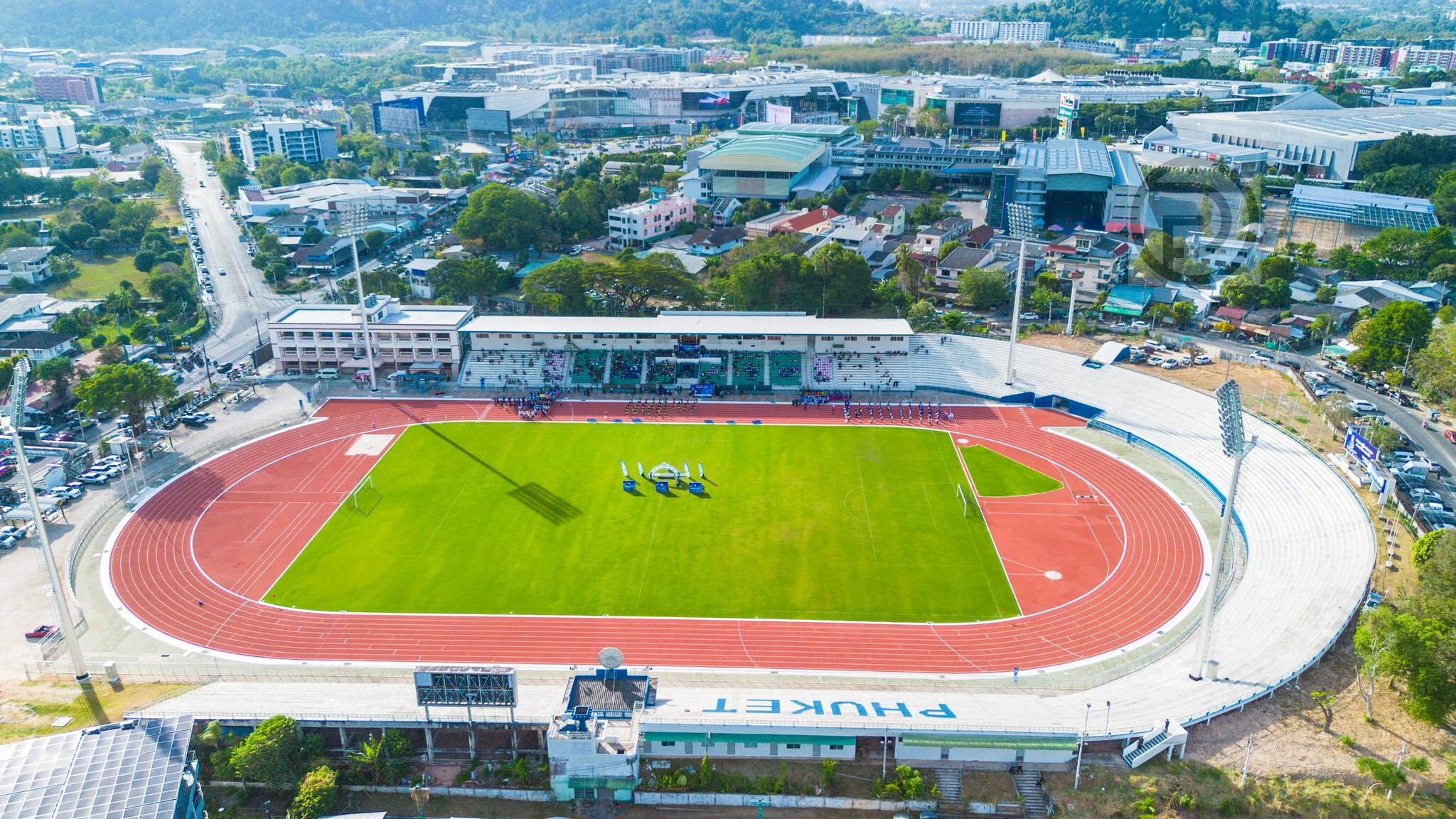
The wild fantasy. This requires tearing up the rulebook, abandoning the capital entirely, and tapping into the immense wealth and expatriate market of the southern island. While Phuket is undeniably starved of elite football, this move directly contradicts the "BKK - Vicinity" leak, requires the catastrophic destruction of the club's established brand identity, and forces crippling logistical costs for weekly domestic travel.
So, the great 2026/27 stadium shuffle looms. True Bangkok United face a rather straightforward choice: untangle the bureaucratic red tape required to actually play in the city they are named after, or continue their existence as a nomadic telecommunications billboard drifting through the Pathum Thani suburbs. Until the board grasps the fundamental concept of geography, one suspects the swathes of empty blue seats will remain their most loyal followers.
Next tour: Port v Rayong
Saturday 24 October 2026 · ฿3,900 ฿2,999 per person, all inclusive. Ticket, private transport, pre-match briefing and a guide who knows the league inside out.
Book Your Place → Buriram United
 Uthai Thani
 Bangkok United
 Prachuap
 Port
Port Ratchaburi
 Rayong
 Ayutthaya United
 Sisaket United
 Pathum United
 Chiangrai United
 Pattani
 Sukhothai
 Rasisalai United
 Lamphun Warrior
 Chonburi