
In the modern, hyper-accelerated world of global football, "long-term planning" is usually an administrative euphemism for "we have no idea what we are doing." In Thailand, where the average lifespan of a head coach is roughly equivalent to that of a dragonfly, the suggestion of a project that won't yield results for a decade is often greeted with polite, confused silence.
Yet, if we are to move past the sad reality that only 2.85% of Thai League footballers are Thai and U21—where youth prospects are statistically invisible in our top flight—we must accept a hard truth: success in football is not a microwave meal. It is a slow-cooked, multi-generational siege. To build a "Thai Clairefontaine" that actually works, we don’t just need a shiny building in Pathum Thani; we need a bespoke, ten-year socio-sporting ecosystem that fixes the player, the parent, and the path to the professional game.
The Hybrid Blueprint: Foreign Ideas, Thai Hands
The first mistake we often make in Thailand is looking at a "shelf-bought" European model and assuming it will function in the humidity of the ASEAN region. The French, German, and Spanish models are brilliant, but they are designed for European physiques, European climates, and European social structures.
The Thai system requires a Hybrid Blueprint. We need to import high-level technical methodologies from abroad—the spatial awareness drills of the Dutch, the defensive discipline of the Italians, the athletic rigour of the English—but we must "fit" them to the Thai reality. This isn’t about making Thai players "more European"; it’s about making them the most elite version of themselves. It’s about leveraging the lower centre of gravity, the agility, and the technical flexibility inherent in the domestic game, while layering on the professional "hardware" that is currently missing.
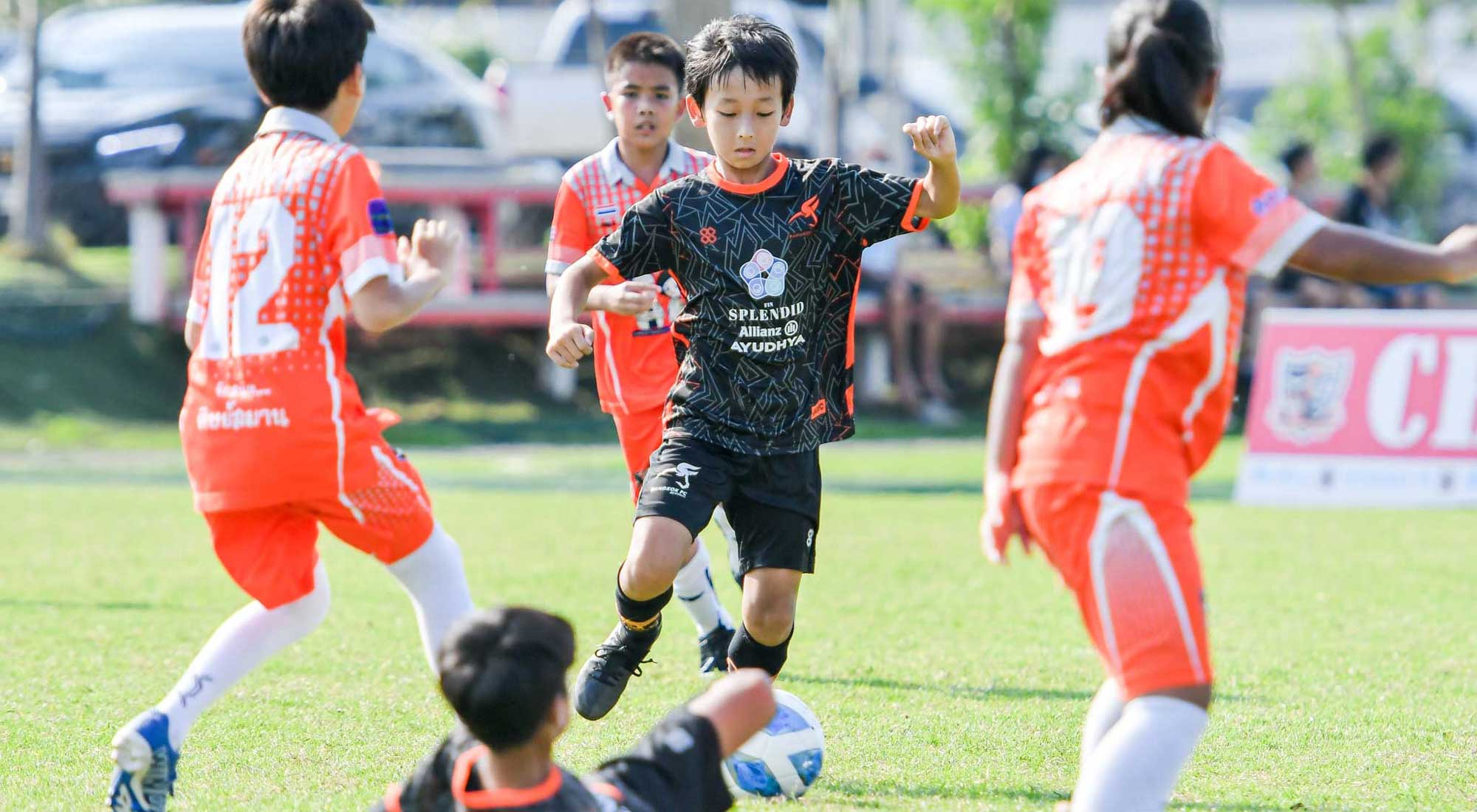
The Parent-Player Compact: Fixing the Foundation
Perhaps the most radical aspect of this 10-year project is the realisation that a player does not exist in a vacuum. A 14-year-old talent spends four hours a day at an academy and twenty hours under the influence of their home environment. If the academy provides elite nutrition, but the home environment provides a diet of high-sugar snacks and inconsistent sleep patterns, the investment is cannibalised.
A bespoke Thai academy must involve training the parents. This is the "Parent-Player Compact." We need to treat the families as part of the high-performance team. This involves education on:
- The Nutritional Delta: Moving beyond the "Sabai Sabai" approach to food. Parents must be taught that elite performance is fuelled in the kitchen, not just the training pitch.
- Lifestyle Discipline: Sleep hygiene, recovery protocols, and the psychological demands of professional sport.
- The Long Game: Managing expectations. A 10-year project requires parents who understand that a growth spurt at age 15 isn't a disaster, but a biological inevitability.
The 10-Year Horizon: The Cost of Patience
We have to be honest with the public: this project will be a statistical black hole for the first five years. There will be no trophies, no "miracle" World Cup qualifications, and no immediate ROI. The first generation of the "Ten-Year Siege" would enter the academy at age 8 or 9. They won't hit the Thai League 1 pitches until 2036.
This requires a level of political and financial fortitude that is rare in Thai sports administration. It requires a "Shield" around the technical staff that protects them from the inevitable "Why haven't we won the ASEAN Cup?" headlines in year three. Success in this model is measured not by scorelines, but by biological and technical milestones.

The Revolutionary Exit: The "Thai Draft" System
Even the most elite academy is useless if the "exit ramp" leads into a brick wall. Currently, as we have documented, Thai clubs are addicted to ageing foreign imports who block the pathway for local talent. To solve this, we should consider a radical, American-style Academy Draft.
Imagine a system where, upon graduating from the National Academy at age 18 or 19, players are "drafted" into Thai League 1 and 2 clubs. But there’s a catch: to be eligible for the draft, a club must demonstrate a guaranteed minute mandate. If you draft a National Academy graduate, you must play them for a set percentage of the season.
This creates a merit-based distribution of talent. It prevents the "Stockpiling Monopolies" where elite teens are signed by heavyweights only to rot on the bench. A draft system, coupled with the impending FIFA 90-minute mandate, would ensure that the 10-year investment in a player’s diet, lifestyle, and technical training actually culminates in competitive professional minutes.
The Business of Belief
Critics will say this is too expensive, too complex, and too "un-Thai." But let us look at the alternative. Currently, we are spending billions on World Cup broadcasting rights and foreign veteran salaries—money that evaporates into the atmosphere with zero lasting impact on our national technical standard.
A 10-year, bespoke project is an investment in Human Capital. It is the professionalisation of the Thai person, not just the Thai player. It involves changing the culture of how we eat, how we sleep, and how we view professional responsibility. The era of the "Quick Fix" has failed us. It is time to begin the Ten-Year Siege.
Next tour: Port v Rayong
Saturday 24 October 2026 · ฿3,900 ฿2,999 per person, all inclusive. Ticket, private transport, pre-match briefing and a guide who knows the league inside out.
Book Your Place →