
Indonesia are the first FIFA ASEAN Cup champions after a 2-2 draw and a 4-2 shootout win in Jakarta. Thailand scored twice with ten men and went home with nothing but adjectives. The numbers suggest they never needed to play it that way.
Emil Audero went to his left, Nattapong Sayriya’s penalty stayed out, and 67,000 people in the Gelora Bung Karno made a noise that Indonesian football has been waiting a generation to make. Six ASEAN finals lost, four of them to Thailand. Eight matches and ten years without beating the War Elephants at all. Then this: a 2-2 draw after extra time, a 4-2 win on penalties and a first senior regional title, won at home, against the one opponent who always seemed to be standing in the doorway.
So well played Indonesia, who were the better side over 120 minutes and over the fortnight. This piece is mostly about the other lot.
Thailand have now lost two finals in six weeks. Vietnam beat them 4-2 on aggregate in the ASEAN Hyundai Cup at the end of August, after which Anthony Hudson said his team had been “the better team over the two games”. On Monday night in Jakarta they went down to ten men, went behind, equalised, went ahead, were pegged back and lost a shootout, after which Hudson spoke of his pride in the spirit of his players and likened penalties to a lottery. Both things can be true. Neither is a trophy.
The word that follows this Thailand team around is brave. They were brave in Hanoi. They were brave in Jakarta. It is always meant as praise and it has started to sound like a diagnosis, because bravery is what a team needs when it has chosen to spend most of a football match without the football. Thailand keep being brave because they keep setting up in a way that requires it.
It is also a very English word. Brave is what English football calls a team that tackles, runs and blocks, and rarely one that takes the ball under pressure and keeps it. The game Hudson grew up in has always been a little suspicious of possession, as if passing sideways were a failure of character. You do not need to take that from a Thai football website. Take it from the England camp. After the World Cup semi-final defeat by Argentina, Thomas Tuchel said that ball possession is “maybe not in our DNA like it is in Spanish DNA”. A fortnight ago Anthony Gordon, now a Barcelona player surrounded by the people who do it best, agreed with him. “England, as a nation, we don’t have that strength, like the Spanish, where we control games like they do,” he said. “It’s not in us.” His answer was for England to lean into being physical, direct and dangerous on the counter.

That may well be right for England. It is the wrong inheritance for Thailand, and Thai football should be wary of having it instilled by default. A country that produces Chanathip, Supachok, Sarach and Seksan does not have England’s problem. It has the opposite one: the technique is there and nobody is asking it to run a game.
The final, in numbers
Start with what the game looked like before it went mad. For 80 minutes this was eleven against eleven, and on the raw count it was level: 13 attempts each, two on target each. Hudson will point to that and he would have a case. Indonesia had 65 per cent of the ball and did very little with it. Over the full 120 minutes FootyStats’ model made it 1.59 expected goals to 0.98, which is a home win on points but hardly a hiding. Mitchell Baker, the tournament’s top scorer, spent the night dragging shots wide.
But look at what it cost. Thailand committed 11 fouls in the first half to Indonesia’s three. By the time Nicholas Mickelson collected his second yellow card in the 81st minute, five minutes after his first, the foul count was 17 to 10. A team that defends for that long, that deep, is always one mistimed tug from a red card. This one was a shirt-pull on Ole Romeny at the edge of the box, and Dean James swung the free-kick in off Iklas Sanron for 1-0. Call it bad luck if you like. It was also the bill arriving.
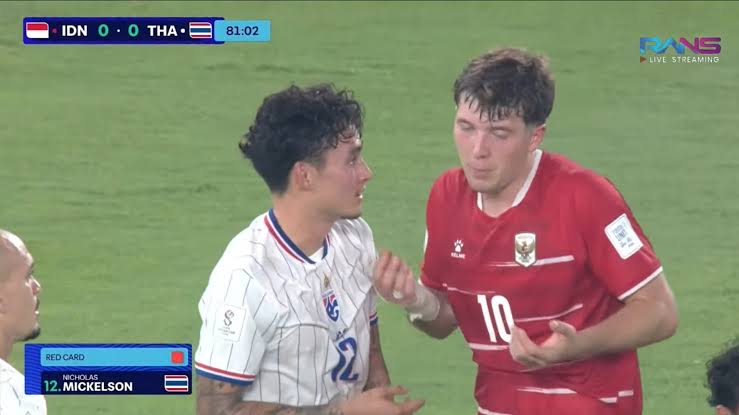
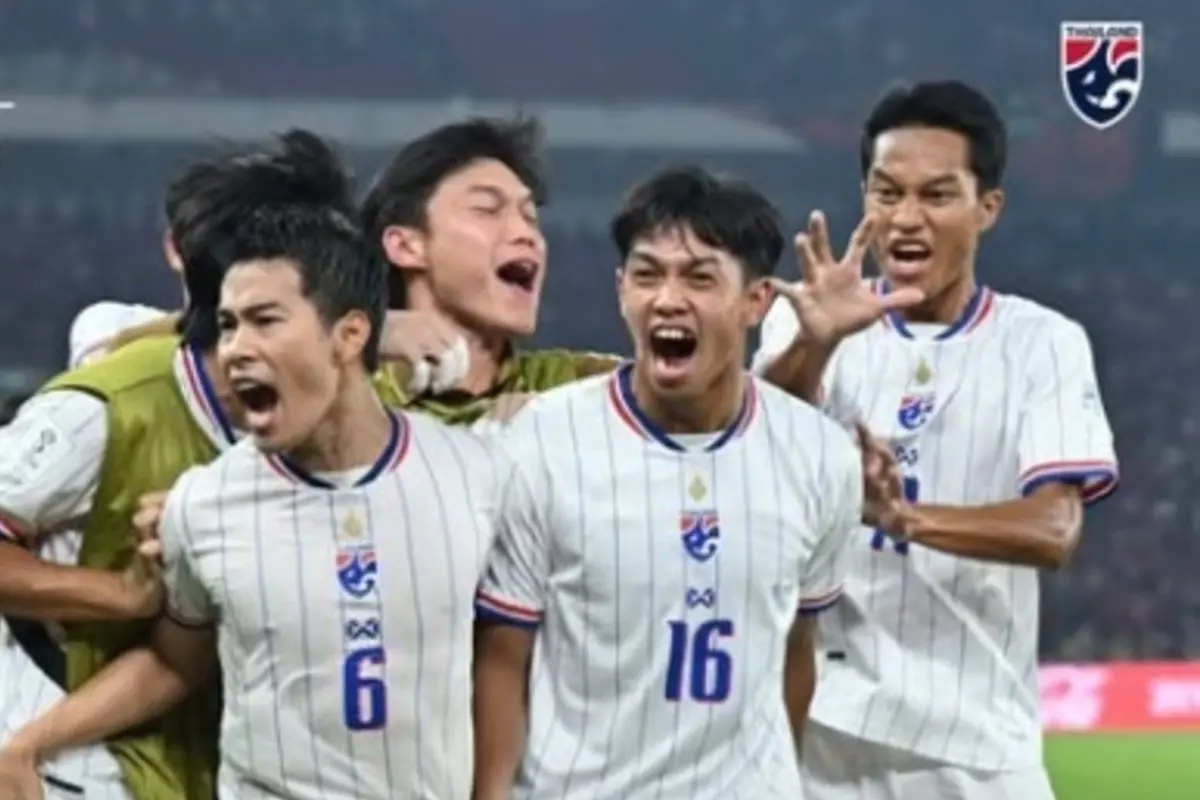
What happened next is the part that will be remembered, and it should be. Three minutes after going behind, Seksan Ratree hung a cross to the far post and Iklas volleyed it in. In extra time Anan Yodsangwal picked the pocket of Elkan Baggott and released Peeradol Chamratsamee, who swept Thailand in front with nine minutes left. Ten men, away from home, 2-1 up in a final. Then Baggott, born in Bangkok of all places, hammered a loose ball in off the underside of the bar in the 116th minute, and Sarach Yooyen hit a post in the shootout, and that was that.
The passing numbers are starker. By LapangBola’s count Indonesia completed 524 passes to Thailand’s 266. They played 69 into the final third to Thailand’s 31 and 27 into the penalty area to 12. The five most prolific passers on the pitch were all Indonesian, led by Justin Hubner with 79. Thailand’s standout individual number belonged to Sarach Yooyen: nine interceptions, more than anyone else on the night. One of the best passers in the region spent a cup final as a ball-winner.
Indonesia 2-2 Thailand (4-2 pens)
| Indonesia | Thailand | |
|---|---|---|
| Expected goals (xG) | 1.59 | 0.98 |
| Possession | 65.1% | 34.9% |
| Passes completed | 524 of 616 | 266 of 335 |
| Pass accuracy | 86% | 80% |
| Passes into final third | 69 | 31 |
| Passes into the box | 27 | 12 |
| Key passes | 23 | 10 |
| Interceptions | 23 | 29 |
| Clearances | 28 | 31 |
| Attempts | 33 | 17 |
| On target | 9 | 4 |
| Attempts, first 80 minutes (11 v 11) | 13 | 13 |
| Attempts after the red card | 20 | 4 |
| Shots blocked by defenders | 8 | 10 |
| Goalkeeper saves | 2 | 7 |
| Corners | 7 | 2 |
| Fouls committed | 16 | 24 |
| Fouls, first half | 3 | 11 |
| Yellow cards | 3 | 6 |
| Red cards | 0 | 1 |
| Category | Leader | Total |
|---|---|---|
| Most passes completed | Justin Hubner (Indonesia) | 79 |
| Next | Elkan Baggott 58, Joey Pelupessy 50, Calvin Verdonk 47, Kevin Diks 46 (all Indonesia) | |
| Most key passes | Dean James (Indonesia) | 7 |
| Most key passes, Thailand | Suphanan Bureerat, Chanathip Songkrasin, Supachai Chaided | 2 each |
| Most interceptions | Sarach Yooyen (Thailand) | 9 |
| Most clearances | Elkan Baggott (Indonesia) 10, Manuel Bihr (Thailand) 9 | |
| Most tackles | Calvin Verdonk (Indonesia) | 5 |
| Most aerial duels won | Elkan Baggott (Indonesia) | 7 |
| Taker | Team | Outcome |
|---|---|---|
| Kevin Diks | Indonesia | Scored |
| Manuel Bihr | Thailand | Scored |
| Dean James | Indonesia | Scored |
| Waris Choolthong | Thailand | Scored |
| Elkan Baggott | Indonesia | Scored |
| Sarach Yooyen | Thailand | Hit the post |
| Shayne Pattynama | Indonesia | Scored |
| Nattapong Sayriya | Thailand | Saved by Audero |
Sources: FIFA official match event feed (attempts, saves, blocks, fouls, minutes; Football Siam count), LapangBola (passing and defensive actions in the final), FootyStats (expected goals). No player-level xG or progressive-pass data has been published for this tournament.
After the red card Indonesia had 20 attempts to Thailand’s four. Saranon Anuin made seven saves on the night. Nattapong Sayriya blocked four shots, Manuel Bihr two. Thailand finished with 24 fouls and six cards. It was heroic, and it was a siege, and Thailand scored from two of the four attempts they managed with ten men. Which rather invites the question of what they might have done with eleven and a bit more of the ball.
The man who never got on
Supachok Sarachat did not play a minute of the final. He did not play a minute against Vietnam either. Across the tournament Thailand played 390 minutes of football and their most gifted tempo-setter, a player with years in the J.League behind him, was on the pitch for 110 of them: 36 as a substitute against Pakistan and 74 in the heavily rotated side that lost to the Philippines. Thai fans were asking before the final whether Hudson was ignoring him or saving him. We have our answer. Hudson used all six substitutes available to him in Jakarta, and when his team needed someone to put a foot on the ball and take the sting out of a ten-man extra time, Supachok was still in a bib.
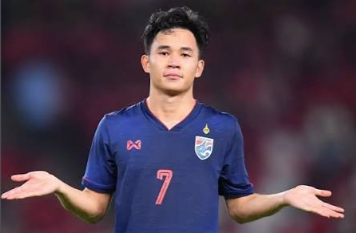
Supachai Chaided started instead. Supachai is a good, honest, direct forward and none of this is his fault, but his stat line from 79 minutes tells you what he was actually asked to do: two attempts, both off target, two blocks at his own end, two fouls and a booking. That is the evening of an auxiliary full-back. Chanathip Songkrasin, the captain, was gone after 63 minutes and played 163 in the whole tournament.
So here is the argument, made plainly. Thailand would have been a better team in Jakarta with Seksan Ratree, Peeradol Chamratsamee and Supachok in the side from the start, in place of Kritsada Kaman, Supachai and Kakana Khamyok. The three who started are workers, and they worked. Kritsada played every minute of the tournament until the 90th of the final, 360 in all, without a goal or an assist. Kakana gave 79 minutes of running and two fouls. Between them the trio finished the final without a goal or an assist.
Now look at who changed the game. Every Thailand goal in the final was both made and scored by a substitute. Seksan came on after 63 minutes, set up the equaliser and finished the tournament with three assists in 168 minutes, second only to Romeny’s four in more than twice the time. Peeradol was sent on for extra time and scored within 21 minutes. LapangBola’s ratings made them the two best Thailand players on the pitch, at 8.9 and 8.6. Anan Yodsangwal had two assists in 143 minutes across the tournament; Iklas scored twice in 121. Thailand’s most productive players were the ones who could pass and carry, and they were mostly watching the first hour.

Thailand: minutes and output
| Player | Minutes (of 390) | Output |
|---|---|---|
| Kritsada Kaman | 360 | 4 starts |
| Nattapong Sayriya | 300 | 6 blocks |
| Manuel Bihr | 284 | 6 blocks |
| Sarach Yooyen | 263 | 1 goal |
| Kakana Khamyok | 245 | 1 assist |
| Peeradol Chamratsamee | 213 | 1 goal |
| Saranon Anuin | 210 | 9 saves |
| Teerasak Poeiphimai | 199 | 2 goals |
| Supachai Chaided | 193 | 0 goals, 0 assists |
| Seksan Ratree | 168 | 3 assists |
| Chanathip Songkrasin | 163 | 0 goals, 0 assists |
| Anan Yodsangwal | 143 | 2 assists |
| Iklas Sanron | 121 | 2 goals |
| Supachok Sarachat | 110 | 0 minutes v Vietnam or in the final |
Sources: FIFA official match event feed (attempts, saves, blocks, fouls, minutes; Football Siam count), LapangBola (passing and defensive actions in the final), FootyStats (expected goals). No player-level xG or progressive-pass data has been published for this tournament.
Hudson has been consistent, to his credit. He rotated against the Philippines because he wanted seven to nine fresh players for the final, and said beforehand that he would make the same call again. Fine. But freshness was never the issue. The issue is that when the big game comes, Thailand’s coach looks at a squad whose natural advantage over every neighbour is technical, creative midfield players, and picks runners.
Play like Thailand
There is a counter-argument and the numbers make it honestly. Thailand beat Vietnam 2-0 with 37 per cent possession, ending a 26-match unbeaten run. They came within four minutes of winning the final with 35 per cent. The one match where they had the ball, 57 per cent against the Philippines, they lost. Sit deep, break fast, win. It works.
It works until it doesn’t. Thailand committed 65 fouls in four matches, the most of any team in the tournament and more than 16 a game. They blocked 23 shots, also the most. Those are the statistics of a side that is suffering by design. And the finishing that made it look sustainable will not last: Thailand scored nine goals from chances FootyStats valued at 5.4 expected goals, the second-biggest overperformance in the Premier Division behind Indonesia. Even in the win over Vietnam they were out-created, 1.74 to 1.18. Against Pakistan, the one evening they simply played, they had 67 per cent of the ball, 23 attempts and four goals.
Anthony Gordon on England: “England, as a nation, we don’t have that strength, like the Spanish, where we control games like they do. It’s not in us.”
The longer view matters more than one shootout. In January Thailand go to the Asian Cup in a group with Qatar, Japan and, yes, Indonesia. Nobody expects them to dominate Japan. But the thing Thai football reliably produces, and has done since long before Hudson, is the small, clever midfielder who wants the ball in traffic: Chanathip, Supachok, Sarach, and now Seksan behind them. Indonesia have rebuilt themselves around height, power and a diaspora. Vietnam have their own structure. Thailand’s edge is the ball.
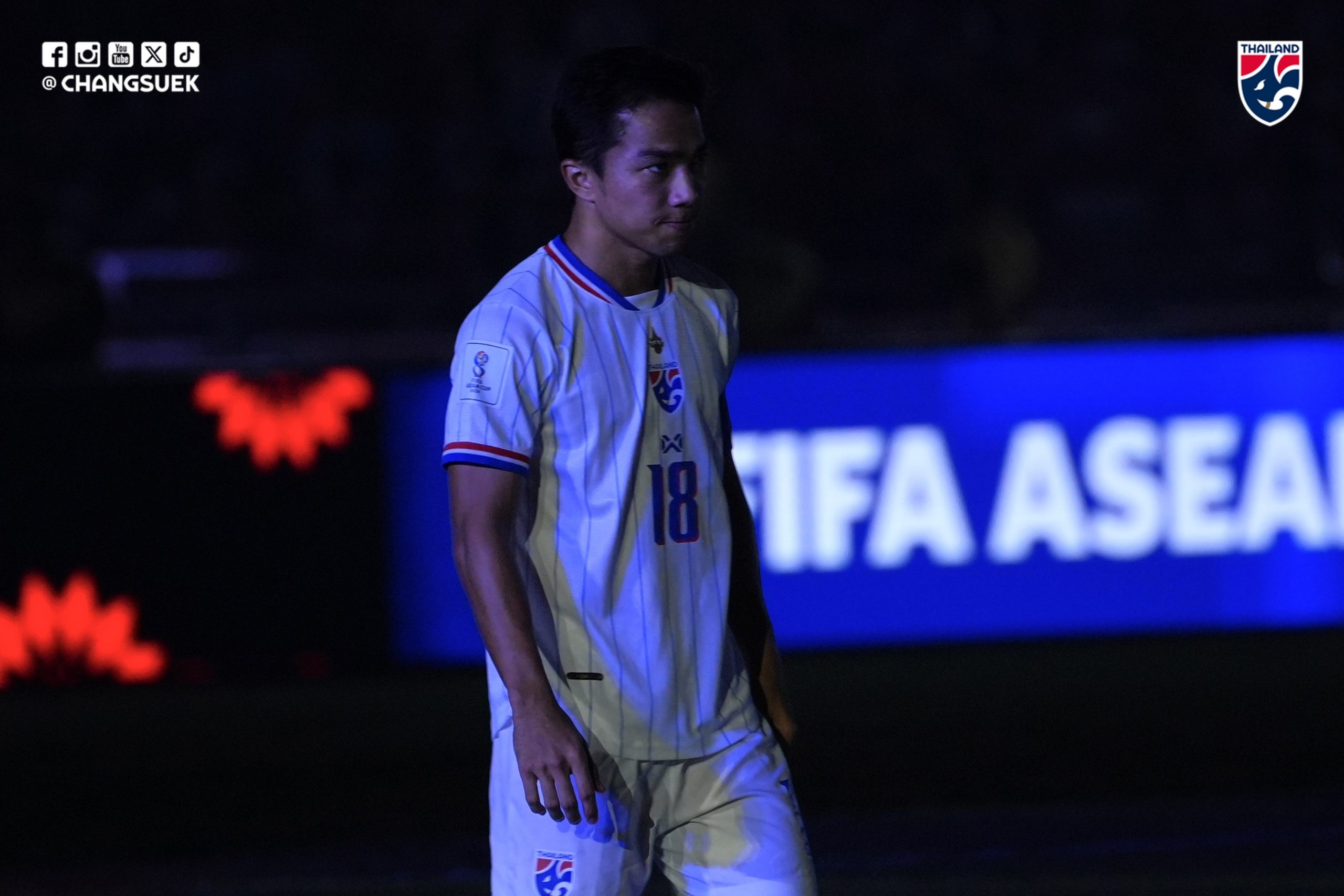
Gordon, to be fair to him, put his finger on the real issue. English players, he said, are educated to keep the ball much as Spanish players are; what differs is the decision-making. That is the gap for Thailand too. The feet are not the problem. The footballing brains are what need developing: when to slow a game down, when to keep it, how to kill ten minutes with the ball instead of ten tackles. Nobody learns that from the bench. A national team that treats its best passers as a luxury for dead rubbers is not playing to its strengths; it is hiding them, and it is making sure the next generation never grows the habit either.
The tournament: who actually stood out
Indonesia were deserved champions on volume alone: 89 attempts and 13 goals in four matches, with 34 corners. Baker’s place at the top of the scoring chart comes with an asterisk he will not mind. All five of his goals came in the 9-2 demolition of Bangladesh, and in the final he had five attempts off target and none on the scoresheet. He also led the tournament for efforts off target, with ten. Nobody has published player-level expected goals for this competition, but it is hard to imagine anybody ran up a bigger number, or left more of it out there. Romeny, with four assists and a penalty, was the better player.
The hardest-luck story belongs to Malaysia. Four matches, ten goals scored, none conceded, and third place, because they drew 0-0 with Indonesia and missed out on the final on goals scored. They also had the best attack in the tournament by expected goals, 1.93 a game to Indonesia’s 1.91, and won the xG in that goalless draw by 2.58 to 0.68. Bergson da Silva’s four goals put him second on the scoring chart; Arif Aiman added two goals and two assists. Bangladesh’s goalkeeper Mehedi Hasan Srabon made 14 saves in three games and still conceded 13. Pakistan took a first point in a FIFA tournament. Vietnam finished fourth and looked tired.
Tournament leaders
| Player | Team | Goals | Minutes |
|---|---|---|---|
| Mitchell Baker | Indonesia | 5 | 322 |
| Bergson da Silva | Malaysia | 4 (1 pen) | 300 |
| Bjørn Martin Kristensen | Philippines | 3 (1 pen) | 265 |
| Iklas Sanron | Thailand | 2 | 121 |
| Teerasak Poeiphimai | Thailand | 2 | 199 |
| Arif Aiman | Malaysia | 2 | 231 |
| Nguyễn Đình Bắc | Vietnam | 2 | 255 |
| Player | Team | Assists | Minutes |
|---|---|---|---|
| Ole Romeny | Indonesia | 4 | 356 |
| Seksan Ratree | Thailand | 3 | 168 |
| Phan Tuấn Tài | Vietnam | 2 | 96 |
| Anan Yodsangwal | Thailand | 2 | 143 |
| Arif Aiman | Malaysia | 2 | 231 |
| Nguyễn Đình Bắc | Vietnam | 2 | 255 |
| Manuel Hidalgo | Malaysia | 2 | 324 |
| Category | Leader | Total |
|---|---|---|
| Shots blocked | Mohib Ullah, Abdullah Iqbal (Pakistan), Manuel Bihr, Nattapong Sayriya (Thailand), Elkan Baggott (Indonesia) | 6 each |
| Goalkeeper saves | Mehedi Hasan Srabon (Bangladesh) | 14 |
| Saves, next best | Saranon Anuin (Thailand), Yousuf Butt (Pakistan), Patrik Lê Giang (Vietnam) | 9 each |
| Clean sheets | Malaysia | 4 from 4 |
| Most off-target attempts | Mitchell Baker (Indonesia) | 10 |
| Most fouls committed | Kevin Diks (Indonesia) | 8 |
| Most fouls, Thailand | Teerasak Poeiphimai, Peeradol Chamratsamee | 7 each |
| Team | P | GF | GA | xG | xGA | Avg poss. | Attempts | Fouls |
|---|---|---|---|---|---|---|---|---|
| Indonesia | 4 | 13 | 4 | 7.63 | 4.76 | 51.2% | 89 | 50 |
| Thailand | 4 | 9 | 4 | 5.44 | 4.63 | 49.0% | 57 | 65 |
| Malaysia | 4 | 10 | 0 | 7.73 | 4.41 | 57.1% | 70 | 32 |
| Vietnam | 4 | 5 | 5 | 5.19 | 4.12 | 54.2% | 57 | 29 |
| Philippines | 3 | 4 | 4 | 4.20 | 2.66 | 57.1% | 38 | 32 |
| Singapore | 3 | 1 | 8 | 3.78 | 4.81 | 54.3% | 34 | 29 |
| Pakistan | 3 | 4 | 10 | 2.43 | 6.08 | 32.8% | 25 | 32 |
| Bangladesh | 3 | 2 | 13 | 2.43 | 7.36 | 40.4% | 17 | 38 |
Sources: FIFA official match event feed (attempts, saves, blocks, fouls, minutes; Football Siam count), LapangBola (passing and defensive actions in the final), FootyStats (expected goals). No player-level xG or progressive-pass data has been published for this tournament.
Good tournament. Now pick one
FIFA can be pleased. The football was open, 48 goals in 14 Premier Division matches at 3.4 a game, and the thing was well run: two divisions, clean scheduling, one lightning delay in Bandung handled without fuss. It also looked well attended. The final drew 67,000 in Jakarta and the Challenge Division final pulled 31,374 into Kai Tak to watch Hong Kong beat Cambodia. Crucially it sat in a FIFA window, so squads were close to full strength, a courtesy the old regional championship has rarely been able to count on.
And that is the problem. This was the second Southeast Asian championship in ten weeks. Thailand played 11 tournament matches between 1 August and 5 October, reached two finals and lost them both. Vietnam won one title and then limped through the next. No region needs two of these, and no domestic league can keep stopping for both.
If the FIFA ASEAN Cup is to have a future, it has to be as the replacement for the Hyundai Cup, not its noisy neighbour. One tournament, in the window, with FIFA’s organisation and the old competition’s history and edge. Run both and each will slowly devalue the other, until a final between Indonesia and Thailand in front of 67,000 starts to feel like just another one.
And finally

The good news is that it is over. Thailand host the King’s Cup in Sisaket in November and the Asian Cup follows in January, when Hudson will have the same decision to make about the same players. Before then, mercifully, there is a league to watch. Thai League 1 returns on Friday. Nobody will call it brave. It will be a relief.
Predict the score of every match, free. Three points for an exact score, one for the right result, and the manager top of the table at the end of the month wins a signed, match-worn Thai League 1 player’s shirt.
Next tour: Port v Rayong
Saturday 24 October 2026 · ฿3,900 ฿2,999 per person, all inclusive. Ticket, private transport, pre-match briefing and a guide who knows the league inside out.
Book Your Place → Buriram United
 Uthai Thani
 Bangkok United
 Prachuap
 Port
Port Ratchaburi
 Rayong
 Ayutthaya United
 Sisaket United
 Pathum United
 Chiangrai United
 Pattani
 Sukhothai
 Rasisalai United
 Lamphun Warrior
 Chonburi