
Let it be stated clearly: Thai domestic football possesses a unique, intoxicating charm that is entirely its own. As a regular on the terraces of the PAT Stadium, I am consistently struck by the vibrant, communal ecosystem that surrounds Port FC. The food stalls of the famous 'Sandpit' offer a pre-match culinary experience that rivals any in Asia, while the crowd itself strikes a rare balance—deeply welcoming to outsiders, yet capable of generating a fervent, raw support that bristles with genuine passion. It is a wonderful, visceral matchday. Yet, it is accompanied by a sobering reality: even with a highly condensed, modest capacity of just 6,250, the stadium very rarely sells out.
This paradox—intense local flavour that somehow fails to translate into maximum, consistent capacity—was at the forefront of my mind this week. I have just returned from Japan, having spent a week immersing myself in the hyper-choreographed chaos of a Tokyo derby. The sheer scale of the matchday operation is staggering. From the moment you step off the train, you are integrated into the event. Staff hand out match-specific collectible stickers to fans, whilst dedicated kids' entertainment zones ensure the next generation is instantly hooked. Outside the stadium sits a sprawling village of twenty to thirty food and drink stalls, flanking club shops that sell every conceivable piece of merchandise. Inside the ground, the air vibrates with unique, relentless chants beneath towering tifos.
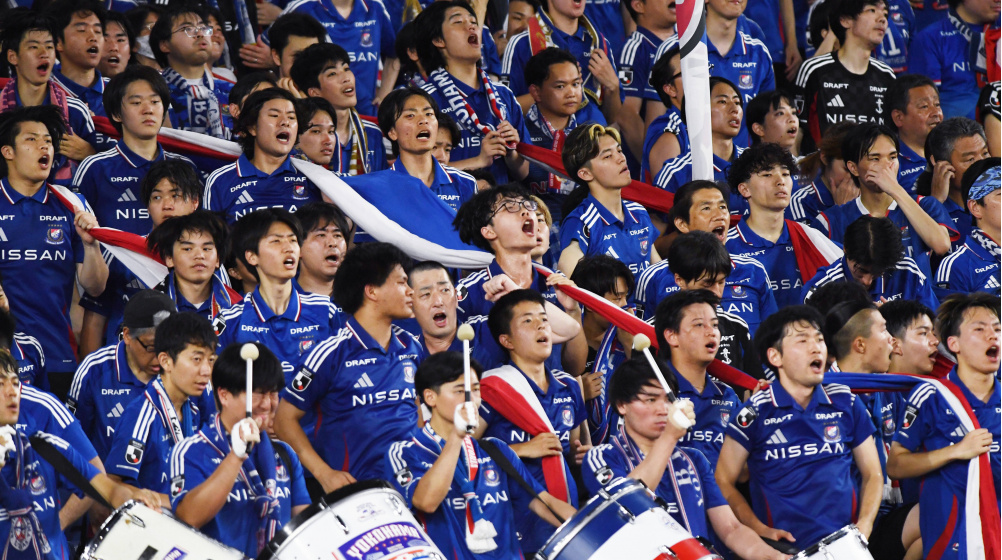
It is the undisputed gold standard of Asian domestic football. Yet, stepping back into the sweltering stands of Thai League 1, it becomes increasingly apparent that Thailand’s domestic game is standing exactly where Japan was in 1994: riding the crest of an initial boom, overly reliant on foreign output, and facing a critical, existential juncture in its structural evolution.
The '100-Year Vision' vs. The Nomadic Vanity Project
To understand the 1994 parallel, we must understand what Japan got wrong, and how they fixed it. In its inaugural seasons, the J-League was a carnival. Attendances averaged nearly 20,000. But the foundations were built on sand. Many clubs were still intrinsically linked to their corporate founders—Mitsubishi, Nissan, Mazda. They were company teams playing in company towns. When the Japanese economic bubble fully burst in the late 1990s, the corporate money dried up, the novelty wore off, and attendances effectively halved.
Japan’s salvation was the JFA’s "100-Year Vision" (Hyakunen Kōsō). It was a ruthless mandate that forced clubs to drop their corporate monikers and embed themselves permanently into their local municipalities. Yokohama Marinos, Urawa Red Diamonds, Kashima Antlers—they became civic institutions, not just corporate billboards.

Look at the Thai League today, and we see the exact same corporate vanity projects that Japan surged thirty years ago. True Bangkok United are the prime example. Despite contending at the very top of the table, they finished dead last in the 2025/26 attendance table with a pitiful average of 2,065. Astoundingly, they hosted nine matches this season in front of fewer than 2,000 fans.
Why? Because they are a nomadic club. They have wandered around the northern suburbs of the capital for too long, currently playing in the cavernous, soulless Thammasat Stadium, saddled with an ownership that seems entirely uninterested in cultivating a true, working-class geographic identity. Until Thai clubs divorce themselves from being mere extensions of corporate conglomerates and root themselves in civic pride, they will never generate the generational tribalism required to pack stadiums.
The Attendance Illusion
To understand the fragility of the current Thai structure, one only has to look at the turnstiles. On paper, the 2025/26 season was a success: average attendances across T1 rose by 7.2% to 5,172.
However, dig beneath the surface and that growth is a statistical mirage. The increase is almost entirely carried by freak spikes and the honeymoon period of the newly promoted teams. Take Chiangrai United’s monumental 101% surge, for example. On the surface, this looks like a triumph of modern marketing and a sudden, organic awakening of grassroots passion in the far north. In reality, it was driven almost entirely by the inauguration of their newly renovated stadium. It is a classic infrastructural anomaly—a shiny new home that naturally generated a temporary, novelty-driven spike in local curiosity. History dictates that such honeymoon periods inevitably wane if the underlying matchday experience, the digital infrastructure, and the on-pitch product fail to evolve in tandem. If you remove this stadium-induced anomaly and compare the core of the remaining league to last season, average attendances actually fell by 4.2%.
The gulf between the elite and the rest is staggering. Buriram United averaged 18,203 fans, and their lowest attendance of the season (13,477) was still higher than the highest single crowd recorded by any other club.
At the other end of the spectrum, the rot is evident. Eighteen matches this season were played in front of fewer than 2,000 fans. Astoundingly, Bangkok United—a side contending at the top end of the table—hosted nine of those, finishing dead last in the attendance table with a pitiful average of 2,065. This is the tragic reality of a nomadic club that has been wandering around the northern suburbs of the capital for too long, saddled with an ownership that seems hugely uninterested in marketing the club or cultivating a true, working-class geographic identity.
The Relegation Vacuum and the Pattani Hope
The attendance crisis is about to compound. The relegation of Muangthong United (who boasted the 5th highest average attendance at over 5,000) alongside Kanchanaburi leaves a massive vacuum in the league's aggregate gate receipts.
Looking at the teams coming up from Thai League 2 to replace them, there is little to suggest the void will be filled. Rasisalai United and Sisaket United have already secured promotion, but both operate with modest fanbases, averaging around the 1,600 and 2,100 marks respectively. Replacing a 5,000-fan average with a 2,000-fan average spells disaster for the league's overall commercial optics next season.
There is, however, one potential saviour: Pattani FC.
Operating in the Deep South, Pattani boast a massive, fanatical following, averaging a remarkable 6,368 fans in T2—a figure that would comfortably place them in the top half of T1 attendances, and one that would likely surge upon promotion. However, their top-flight status hangs by a thread. They trail Nongbua Pitchaya (who average a mere 1,377 fans) 2-1 heading into their home second-leg playoff final this Saturday. If Pattani do not go up, the Thai League 1 average attendance is almost guaranteed to plummet next year.
The Marquee Mirage and the Academy Mandate
In 1994, the J-League narrative was dominated by imported superstars. Gary Lineker, Zico, and Pierre Littbarski were drawing massive crowds, providing box-office appeal while domestic players largely learned on the job. Thailand doesn't quite have that same calibre of globally transcendent names, but the structural reliance on imported talent is identical.
The statistics are damning: not a single Thai player features in the Thai League 1 top ten goalscorers. The spine of almost every team is dictated by foreign imports—a towering Brazilian centre-back, an energetic African enforcer, and a South American target man.
The Football Association of Thailand is aware of the crisis. A new quota system aims to stem the bleeding, mandating a maximum of seven foreign players on the pitch from a fixed allocation of ten in a matchday squad. It is a necessary intervention, but as Japan realised in the late 90s, tweaking quotas does not build a sustainable footballing culture. It merely rents one.
When the J-League crashed, they didn't just alter quotas; they forced structural change. They mandated that every professional club must operate a fully funded, multi-tier academy system. They built the infrastructure to replace the ageing Brazilians with technically gifted local boys. Thai clubs, conversely, still largely view their academies as secondary, box-ticking obligations rather than primary financial and sporting assets.







The Commercial Disconnect
This attendance fragility loops directly back to the 1994 J-League parallel. When J-League attendances initially plummeted after their boom years, clubs survived by aggressively professionalising their digital footprints, creating frictionless e-ticketing, and turning their physical merchandise operations into highly efficient revenue streams. They made it impossible for a fan not to spend money at the stadium.
In Thailand, the commercial infrastructure remains bafflingly fragmented. While the product on the pitch is often of a highly technical standard, the matchday commercial engine is severely lacking. We still see professional clubs relying on Facebook pages, manual bank transfers, and PromptPay QR codes that require administrative approval.
If clubs cannot guarantee 10,000 fans through the gates, they absolutely must guarantee that the 3,000 who do turn up can easily purchase a shirt via a centralised, bilingual web portal. They must ensure that the concourse features the kind of retail density seen in Tokyo, transforming a 90-minute match into a three-hour, revenue-generating event.
The Turning Point
Thai League 1 is approaching a painful but necessary correction. It is currently the strongest league in the ASEAN region, drawing top talent from across Southeast Asia, but regional dominance is not a guarantee of future stability.
If club owners do not use this impending attendance dip to professionalise their digital operations, enforce strict academy output, and cultivate genuine local tribalism over corporate vanity, the Thai game will stagnate. Thailand has the talent, the stadiums, and the financial backing to be the J-League of Southeast Asia. But as Japan learned thirty years ago, having the right ingredients means nothing if you refuse to change the recipe.
Next tour: Port v Rayong
Saturday 24 October 2026 · ฿3,900 ฿2,999 per person, all inclusive. Ticket, private transport, pre-match briefing and a guide who knows the league inside out.
Book Your Place → Ratchaburi
 Rayong
 Ayutthaya United
 Sisaket United
 Chiangrai United
 Pattani
 Sukhothai
 Rasisalai United
 Lamphun Warrior
 Chonburi
“bilingual web portal”
Multi-lingual. Thailand will receive upwards of 35million visitors this year – the biggest numbers coming from China, India, Malaysia, Korea and Russia….
Like your visit to Japan many would be happy to experience Thai football. While not discouraged there is no effort made by the League or most clubs to encourage foreign visitors.
Same with the large number of non English/Thai speakers living in Thailand. Chinese, Korean, Japanese, Russian. Clubs need to reach out to this audience.
One of the problems with scrapping the Asian/ASEAN quotas is that clubs may not choose not to recruit from these countries. But add a Chinese or Korean player to your squad generates a whole new audience.
Then make the matchday experience more welcoming for foreign visitors. For a while CMFC were making pre-match announcements, including the starting XIs, in Thai and English. It was a start. Every club should be doing that as a minimum.
Same with a club’s social media and online presence. Just simple things that should be multi-lingual – where to buy tickets and merchandise; are tickets available at the stadium; how to get to the stadium. Club’s should not be relying on fan pages to do this for them. And any club that uses social media to block fan pages probably has no interest in its fans!
Watch this space !